Fukui
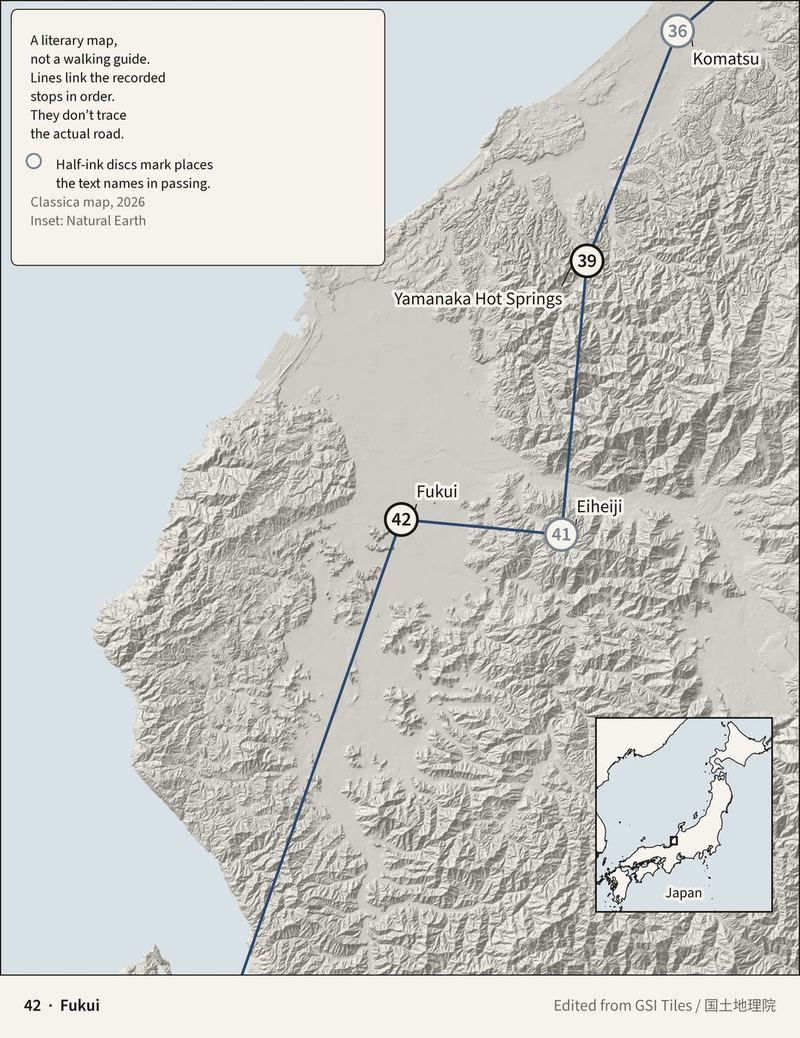
Map, Fukui
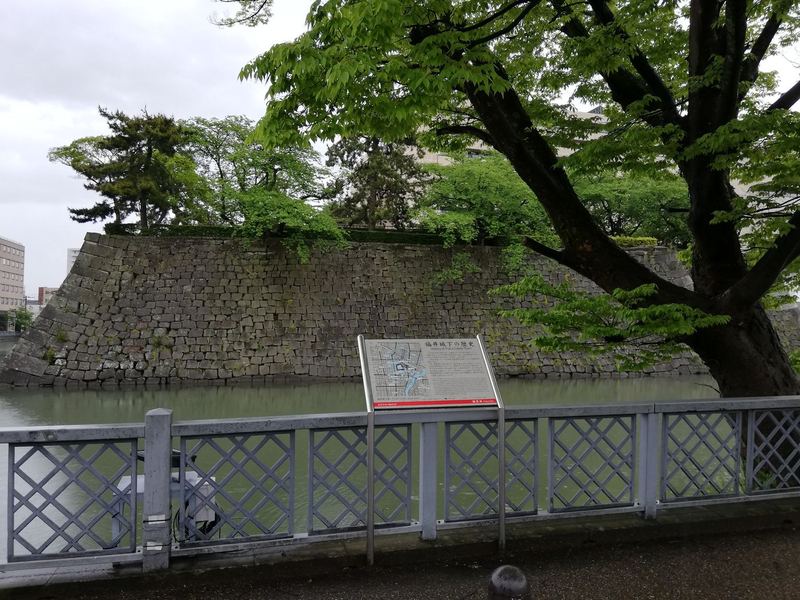
Fukui castle ruins
Fukui was only about three leagues off, so I ate supper and set out, but the road in the twilight was hard to make out. There was an old recluse here named Tōsai. Some year or other he had come to Edo and visited me. That was more than ten years ago. Had he grown frail and old, or had he died? I asked people, and they told me he was still alive and lived in such and such a place. Tucked quietly away within the town was a poor little house overgrown with moonflower and gourd vines, its door hidden by cockscomb and broom-cypress. “This must be it,” I thought, and knocked at the gate. A woman of humble look came out. “Where have you come from, reverend sir? The master has gone to the house of someone around here. If you have business with him, please look for him there,” she said. She must be his wife, I realized. A scene like this belongs in the old tales, I thought. Soon I found him, and I stayed two nights at his house. Then, meaning to see the harvest moon at the port of Tsuruga, I set out. Tōsai said he would come and see me on my way, and tucked up the skirts of his robe in a comical fashion and set off in high spirits to be our guide.
Traveler’s notes
Fukui is only about three leagues off; he eats supper and sets out, but the twilight road is hard to follow.
Tōsai (等栽), an old recluse, had visited Bashō in Edo more than ten years before. People say he is still alive. Tucked away in the town is a poor house overgrown with moonflower (夕顔) and gourd (へちま), its door hidden by cockscomb (鷄頭) and broom-cypress (はゝきぎ).
A woman of humble look — his wife, Bashō realizes — says the master has gone to someone’s house nearby. A scene like this, he thinks, belongs in the old tales (むかし物がたり). He finds Tōsai and stays two nights.
Meaning to see the harvest moon at the port of Tsuruga, he sets out again. Tōsai tucks up his skirts in a comical way and comes along in high spirits as their guide (路の枝折).
1702 first printing
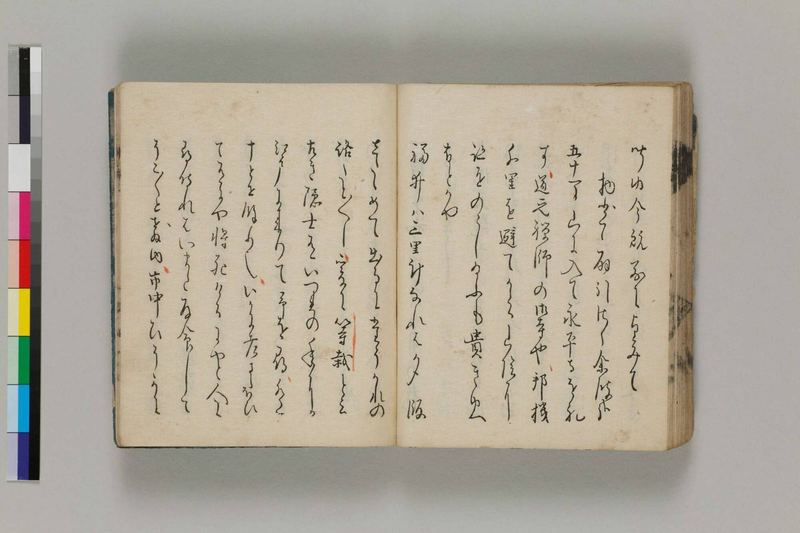
Oku no Hosomichi, 1702