Iizuka
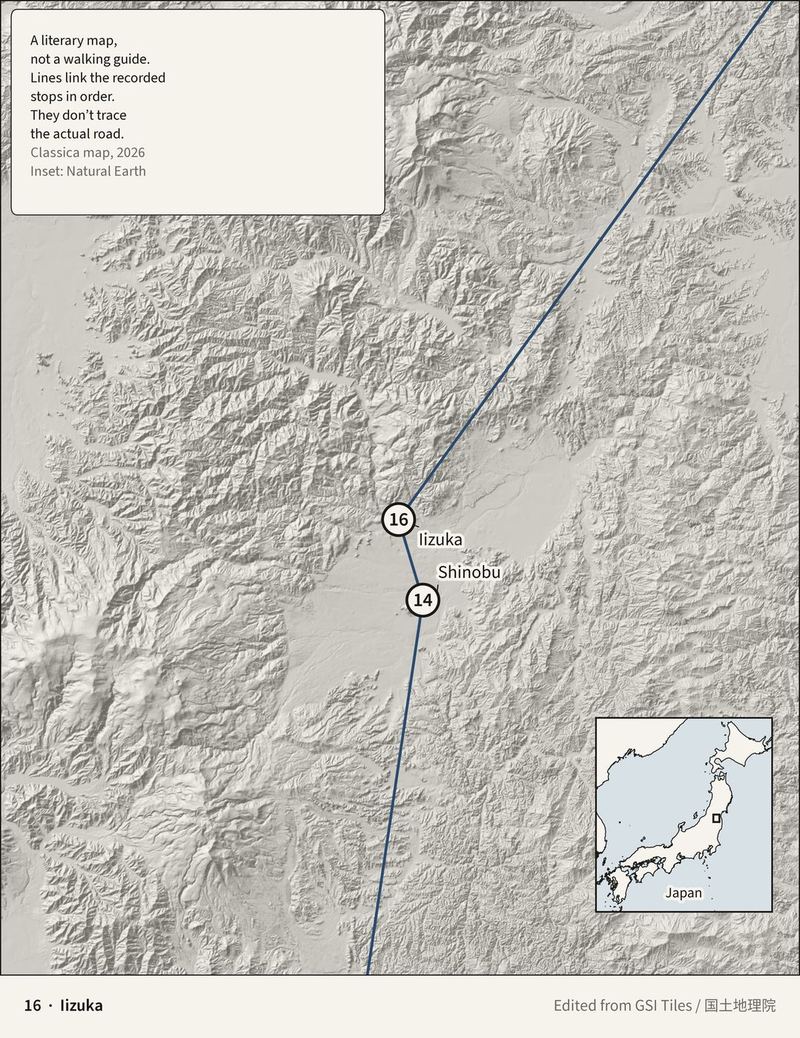
Map, Iizuka
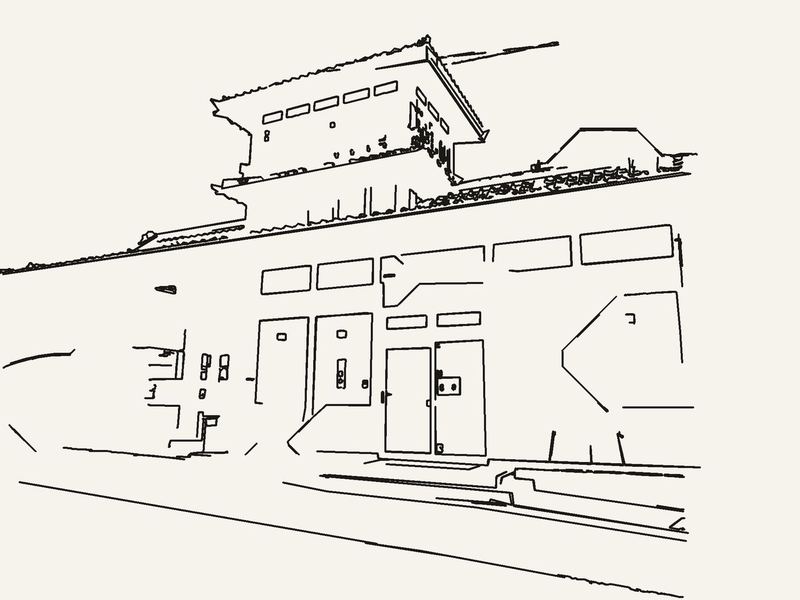
Iizaka Onsen
By the way
The text says Iizuka. Today the place is known as Iizaka Onsen, which is what the sketch shows. One letter apart.
That night we stopped at Iizuka. There was a hot spring, so we bathed and then looked for a place to stay, but it was a wretched, poor house, with straw mats spread over a bare earth floor. There was not even a lamp, so we made up our beds by the glow of the hearth fire and lay down. As night came on, thunder rolled and the rain poured down without letup, leaking onto us where we lay, and with the fleas and mosquitoes biting I could not sleep. My old illness flared up as well, until I felt I might fade away altogether.
When at last the sky of that short night grew light, we set out again. The night still weighed on me and my spirits would not lift, so I hired a horse and came out at the post station of Kōri. With so long a road still ahead of me, an illness like this gave me cause to worry. Yet this was a pilgrimage through remote lands; I had resolved to cast the self aside and to accept that nothing lasts. If I were to die by the road, that would be heaven’s will. With such thoughts I recovered a little of my strength, and striding out freely, this way and that, I passed through the Great Gate of Date.
Traveler’s notes
They stop at Iizuka the same night. The inn is a poor house with mats on a bare earth floor, no lamp, only the hearth fire.
Thunder and rain leak onto them as they lie; fleas and mosquitoes keep Bashō awake, and his chronic illness (持病) flares until he feels he might fade away. What illness this was is uncertain.
短夜, the short night, is a summer kigo. At dawn, still heavy from the night, he hires a horse and comes out at the post station of Kōri (桑折).
He steadies himself with the thought of a pilgrimage through remote country: to cast the self aside, to accept that nothing lasts, and that to die by the road would be heaven’s will (天の命). Then he passes through the Great Gate of Date (伊達の大木戸).
1702 first printing
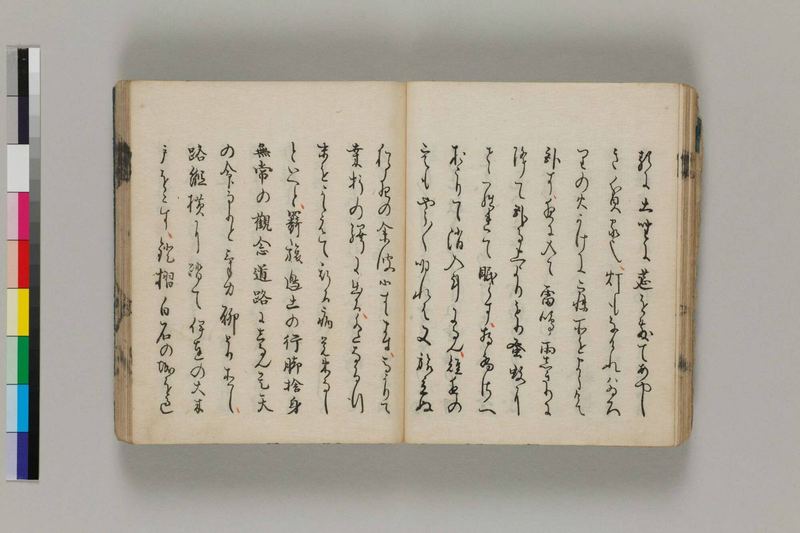
Oku no Hosomichi, 1702