Kanazawa
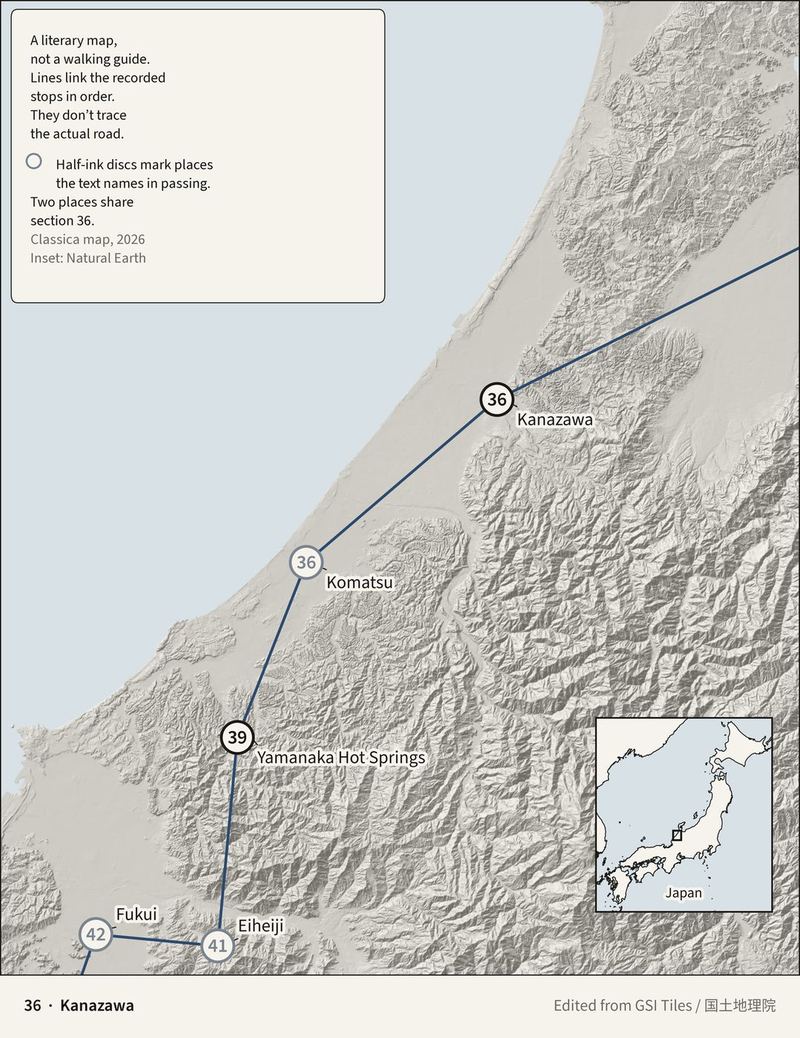
Map, Kanazawa
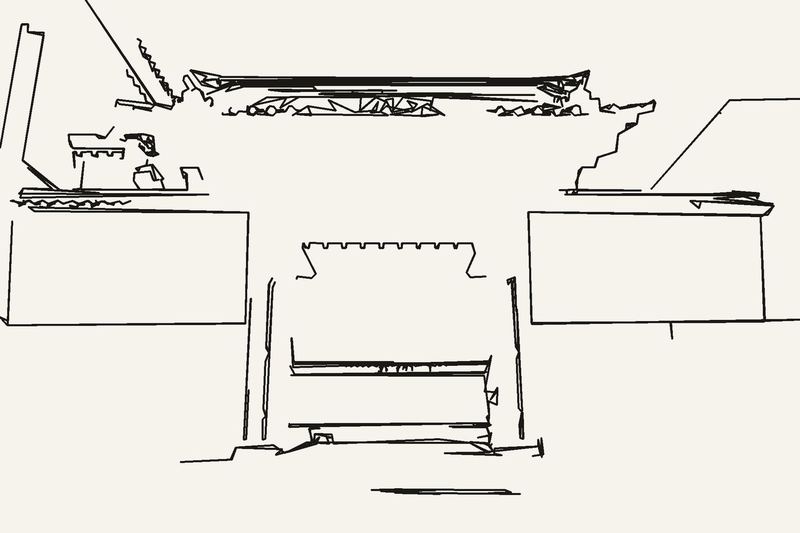
Kanazawa Castle
Crossing Mount Unohana and the valley of Kurikara, we reached Kanazawa on the fifteenth of the Seventh Month. A merchant named Kasho, who travels back and forth from Osaka, was there, and we shared his lodging.
There was a man named Isshō, whose name had begun to be spoken of for his love of this way of poetry, and who had friends in the world. He had died young last winter, and his elder brother held a memorial gathering for him.
Move, grave mound!the voice of my weepingis the autumn wind
Invited to a certain grass hut
The autumn is cool—let each pair of hands peelmelons and eggplants
Composed on the road
Blazing red,the sun shows no pity—yet autumn is in the wind
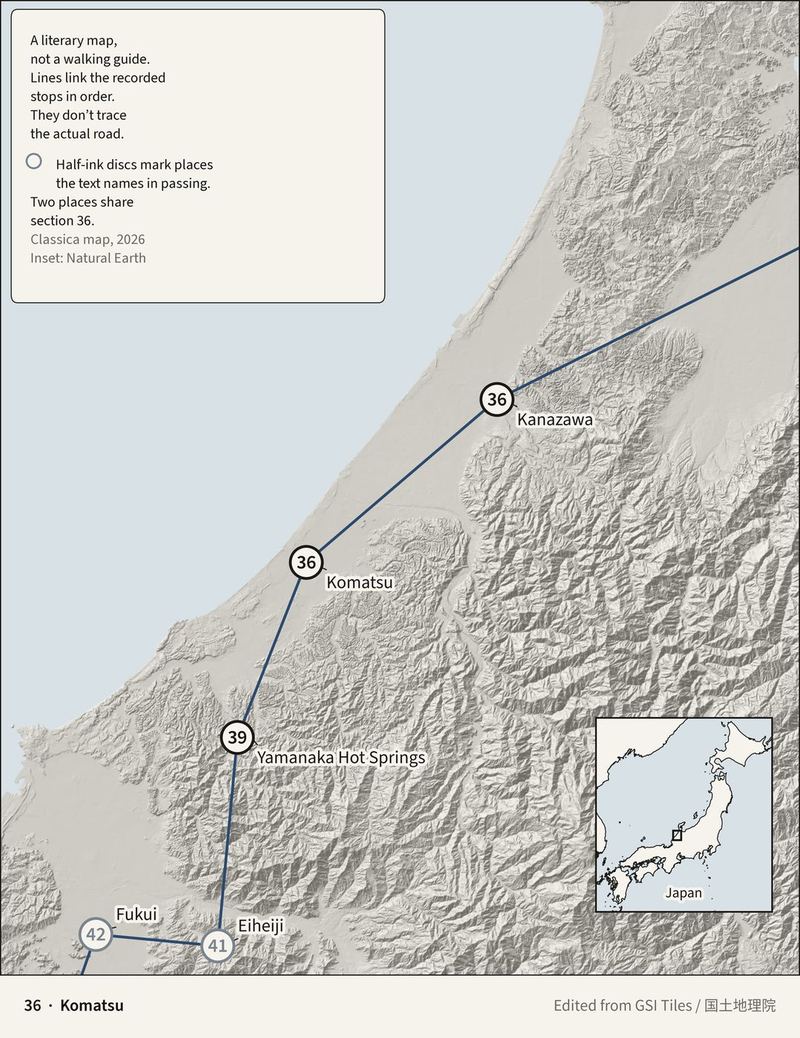
Komatsu
By the way
A short entry, and a verse on the gentle name “Little Pine.” Don’t leave town yet; Ōta Shrine is next.
At a place called Komatsu
What a gentle name—“Little Pine,” where the wind stirsbush clover and pampas grass
Traveler’s notes
Crossing Mount Unohana (卯の花山) and the valley of Kurikara (くりから), they reach Kanazawa on the fifteenth of the Seventh Month. They share lodgings with Kasho (何處), a merchant who travels from Osaka.
Isshō (一笑), whose name had begun to be heard in this way of poetry, died young last winter. His elder brother holds a memorial. 塚も動け / 我泣聲は / 秋の風: “Move, grave mound — the voice of my weeping is the autumn wind.” The first phrase is jiamari (six morae). Autumn wind is the kigo.
The headnote ある草庵にいざなはれて: invited to a certain grass hut. 秋凉し / 手毎にむけや / 瓜茄子: the autumn is cool; let each pair of hands peel melons and eggplants (autumn vegetables).
途中吟, “Composed on the road.” あか〳〵と is akaaka to, the mark 〳〵 repeating か. 難面 is read tsurenaku, “showing no pity”: the sun blazes, yet autumn is already in the wind.
小松と云所にて: at a place called Komatsu, “Little Pine.” しほらしき is shiorashiki, “gentle, touching.” The wind stirs bush clover and pampas grass (萩・薄), autumn kigo.
1702 first printing
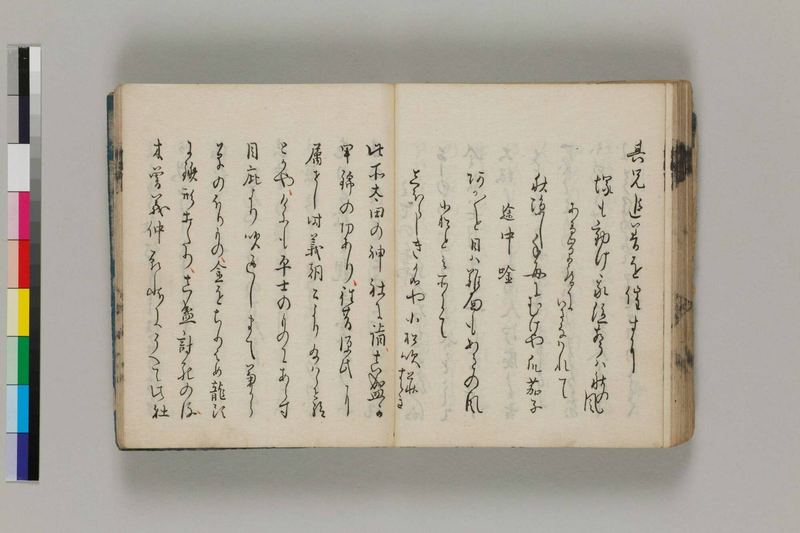
Oku no Hosomichi, 1702