Kasashima
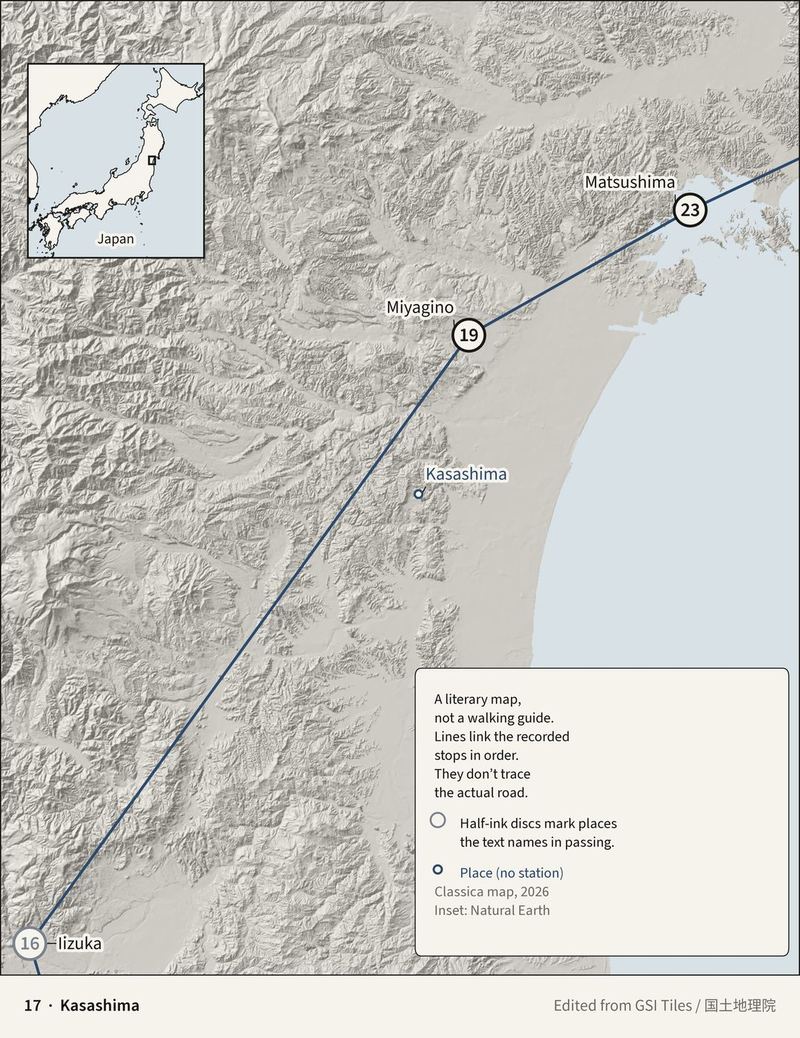
Map, Kasashima
We passed Abumizuri and Shiroishi Castle and entered the district of Kasashima. I asked someone where the grave of Sanekata, the Fujiwara Middle Captain, might be, and was told that the villages seen far off to the right, at the foot of the hills, were called Minowa and Kasashima, and that the shrine of the gods of the road and the keepsake pampas grass were still there. But the Fifth-Month rains of those days had made the road very bad, and I was worn out, so I only gazed toward them from afar as we passed. Minowa, “straw raincoat,” and Kasashima, “hat island,” seemed names well suited to the season of the rains:
Kasashima—which way would it be? Fifth Month,and the road all mud
We lodged at Iwanuma.
Traveler’s notes
After Abumizuri (鐙摺) and Shiroishi Castle they enter the district of Kasashima, looking for the grave of Sanekata, the Fujiwara Middle Captain (藤中將實方), exiled to Mutsu, where he died.
The villages seen far off are Minowa and Kasashima; the shrine of the gods of the road (道祖神) and the keepsake pampas grass (かた見の薄) — Sanekata’s grave-token — are said to be still there.
Fifth-Month rains have ruined the road, so they only gaze from afar. Minowa (“straw raincoat,” 蓑) and Kasashima (“hat island,” 笠) are names that fit the rainy season.
笠嶋は / いづこさ月の / ぬかり道: “Where is Kasashima? The Fifth-Month muddy road.” さ月 is satsuki; ぬかり道 is a slough of mud. They lodge at Iwanuma (岩沼).
1702 first printing
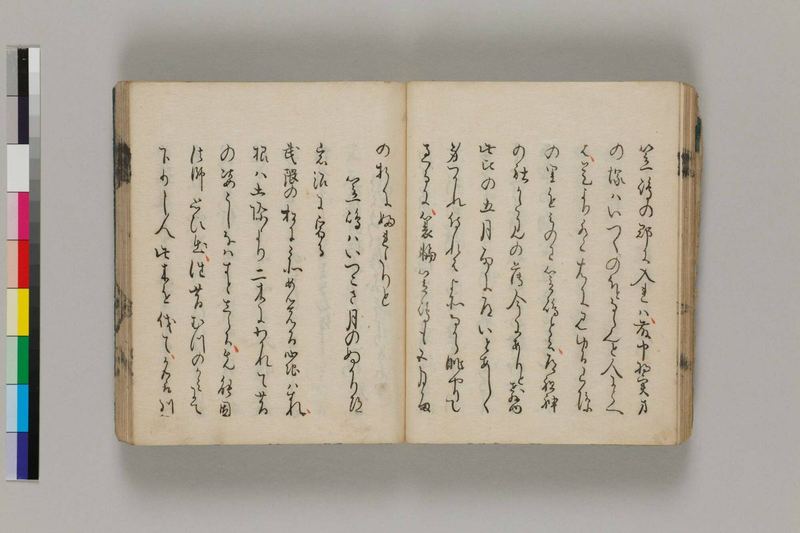
Oku no Hosomichi, 1702