The Mogami River
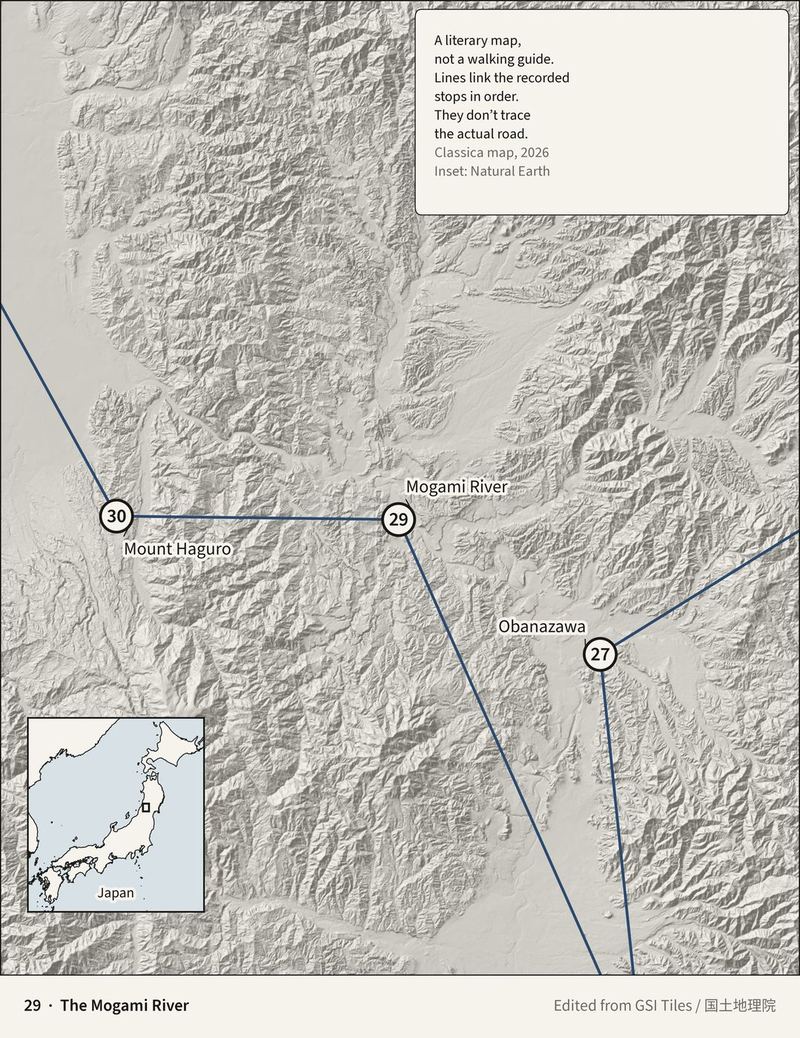
Map, The Mogami River
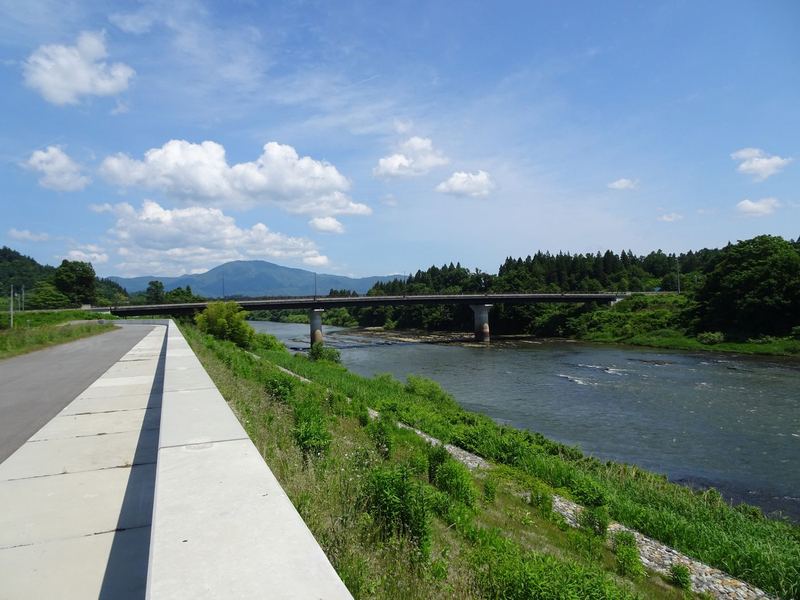
Mogami River, Murayama
Meaning to go down the Mogami River, we waited for fair weather at a place called Ōishida. Here the seeds of the old haikai had once been scattered, and people still long for the days when that flower bloomed and have not forgotten it. The plain music of these country folk, like a single note on a reed pipe, has softened their hearts; they grope their way along this path, they said, lost between the old style and the new, with no one to guide them. And so, because they asked it of me, I left behind one sequence of linked verse. In this journey my pursuit of poetry had come even as far as this.
The Mogami River rises in the far north, with its upper reaches in Yamagata. It has fearful rapids with names like Goten and Hayabusa. It flows north of Mount Itajiki and empties at last into the sea at Sakata. Mountains close in on both banks, and boats go down through the thick of the trees. I suppose it is boats like these, loaded with rice, that are called rice boats. The White Thread Falls drop through gaps in the green leaves, and the Hall of the Immortal stands at the water’s edge. The river runs full and the boat is in danger.
The Fifth-Month rainsall poured into one—how fastthe Mogami runs
Traveler’s notes
Meaning to boat down the Mogami, they wait for fair weather at Ōishida (大石田). Old haikai had once been sown here; people still long for that flowering, grope between the old style and the new (新古ふた道), and ask Bashō to leave a sequence (一卷). 芦角一聲 is a single note on a reed pipe, the plain music of the countryside.
The river rises in the far north, with its headwaters in Yamagata, and empties into the sea at Sakata. Goten and Hayabusa (ごてん・はやぶさ) are fearful rapids; it flows north of Mount Itajiki (板敷山).
Boats loaded with rice are, he supposes, the ones called rice boats (いな船). The White Thread Falls (白糸の瀧) drop through the green leaves, and the Hall of the Immortal (仙人堂) stands at the water’s edge. The river is full and the boat is in danger.
五月雨を / あつめて早し / 最上川: the Fifth-Month rains (samidare, a summer kigo) are gathered into one, and the Mogami runs fast. 早し is the classical hayashi.
Riichi’s 1778 notes
Meaning to go down the Mogami River, we waited for fair weather at a place called Ōishida.
Ōishida lies in the middle of Murayama district. It forms a town on the east bank of the Mogami River. …
The Mogami River rises in the far north, with its upper reaches in Yamagata. It flows north of Mount Itajiki and empties at last into the sea at Sakata.
Goten (ごとん) is written “Go points” (碁點); it is a place in the river. Hayabusa is written “falcon” (隼). In every case there are great rocks on the riverbed 〓. Hayabusa is so named because the force of the water resembles a falcon. They are great difficult places upstream from Ōishida.
The Fifth-Month rains
all poured into one—how fast
the Mogami runs
…
1702 first printing
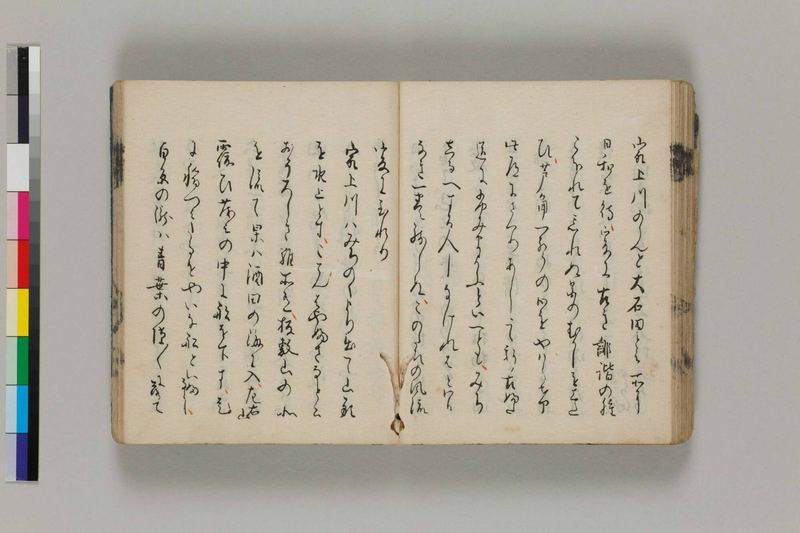
Oku no Hosomichi, 1702