Shinobu Village
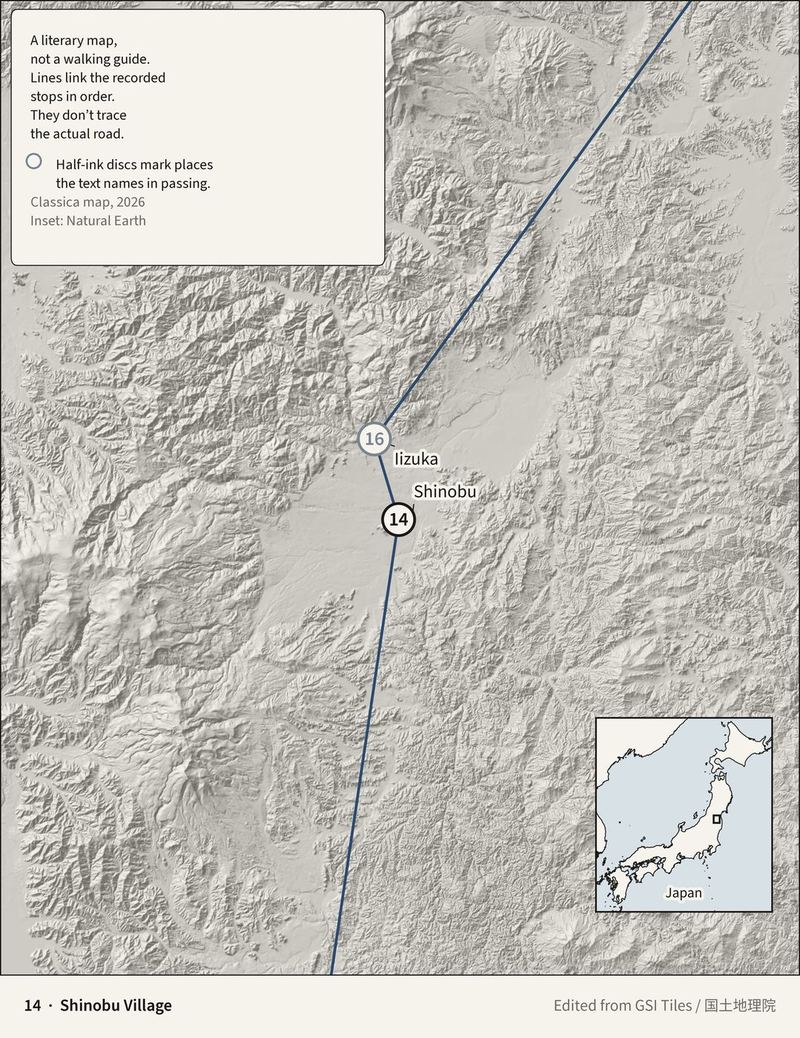
Map, Shinobu Village
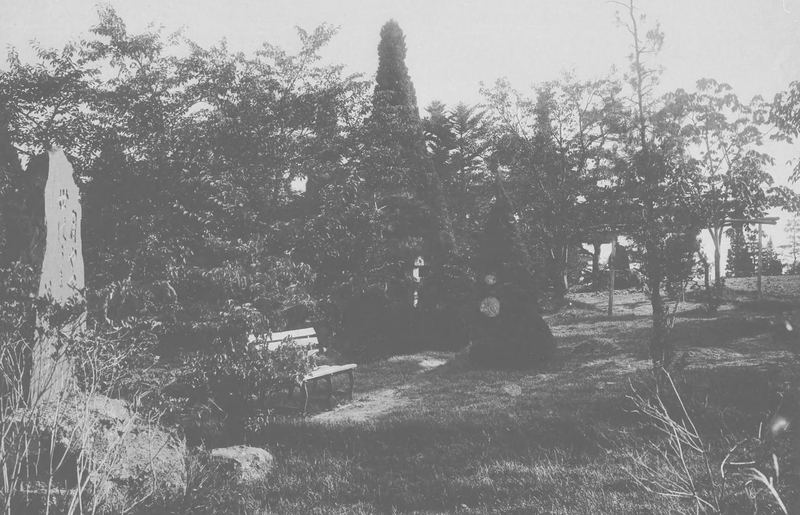
Shinobu Park, 1908
When day broke we went to the village of Shinobu to look for the stone used for the Shinobu mojizuri, the “tangled print.” In a small village far back in the shadow of the hills, the stone lay half buried in the earth. Some village children came and told us about it. “In the old days it was up on top of this hill,” they said, “but people passing by would tear up the young barley to try the stone on it, and the villagers hated that, so they pushed it down into this valley, and it landed face down.” Perhaps that is how it was.
Hands lifting seedlings—in them the old days recalled,the Shinobu print
Traveler’s notes
しのぶのさと (the village of Shinobu) holds the stone used for the しのぶもぢ摺 (Shinobu mojizuri), the “tangled print”: cloth was rubbed with shinobu fern over the stone to make a confused pattern.
しのぶ is the place-name, the fern, and the verb “to recall” (偲ぶ) or “to endure” (忍ぶ). The hokku turns on that overlap: in hands taking up rice seedlings, the old days / the old Shinobu print.
早苗とる (sanae toru), lifting or transplanting rice seedlings, is a summer kigo. 手もとや: や is the cutting word; しのぶ摺 is read shinobuzuri.
Village children say the stone once sat on the hill, but travelers tore up the young barley to try the print, so the villagers pushed it down into the valley, and it landed face down.
1702 first printing
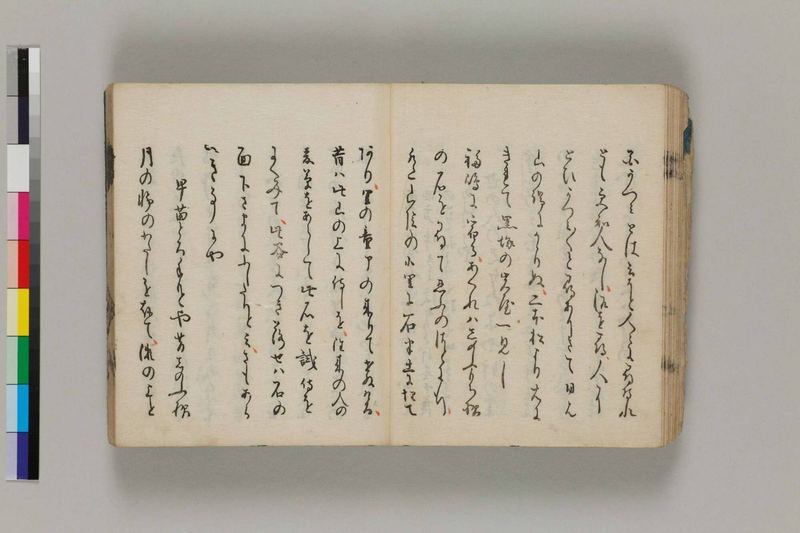
Oku no Hosomichi, 1702