Shiogama
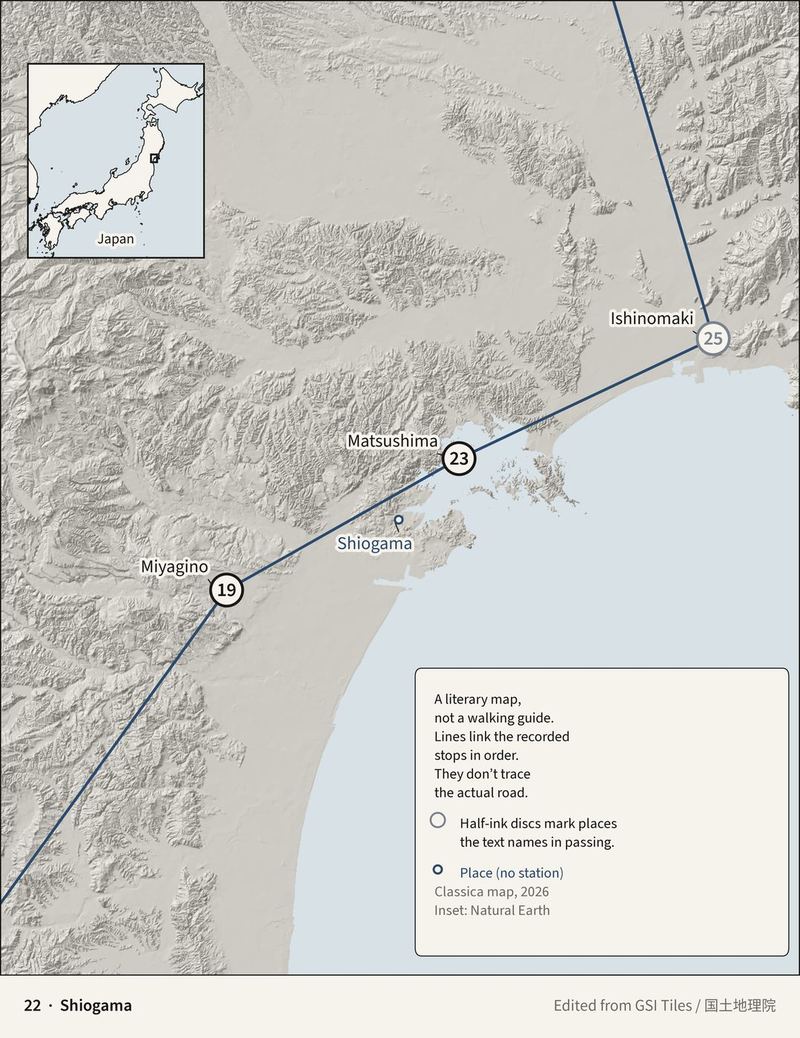
Map, Shiogama
Early in the morning I paid my respects at the Shiogama Shrine. The lord of the province has restored it: its pillars stand stout, its painted rafters glitter, its stone steps climb in tier upon tier, and the morning sun sets the vermilion fence ablaze. That the spirits of the gods should dwell so manifestly even here, at the end of the road, at the edge of the dusty world, is the custom of our land, and I found it deeply worthy of reverence.
Before the shrine stands an old lantern. On the face of its iron door is written: “Offered by Izumi no Saburō in the third year of Bunji.” The image of five hundred years ago rose up before my eyes, and I was strangely moved by its rarity. He was a man of courage and loyalty, of devotion to his lord and his father. His good name has lasted to this day, and there is no one who does not hold him dear. Truly, a man should walk the right way and keep faith; fame, it is said, will follow of itself.
Traveler’s notes
Early morning at the Shiogama Shrine (塩がまの明神), restored by the lord of the province: stout pillars, painted rafters, stone steps climbing tier on tier, the morning sun on the vermilion fence. That the gods should dwell so clearly even at the end of the dusty road is, for Bashō, the way of this land.
An old lantern before the shrine is inscribed “Offered by Izumi no Saburō in the third year of Bunji” (文治三年, 1187). 奇進 here is a donation (寄進). About five hundred years have passed.
Izumi no Saburō (和泉三郎) was a son of Hidehira, remembered as a man of courage, loyalty, and devotion to lord and father (勇義忠孝). His good name has lasted; Bashō draws the lesson that a man should walk the right way and keep faith, and fame will follow.
1702 first printing
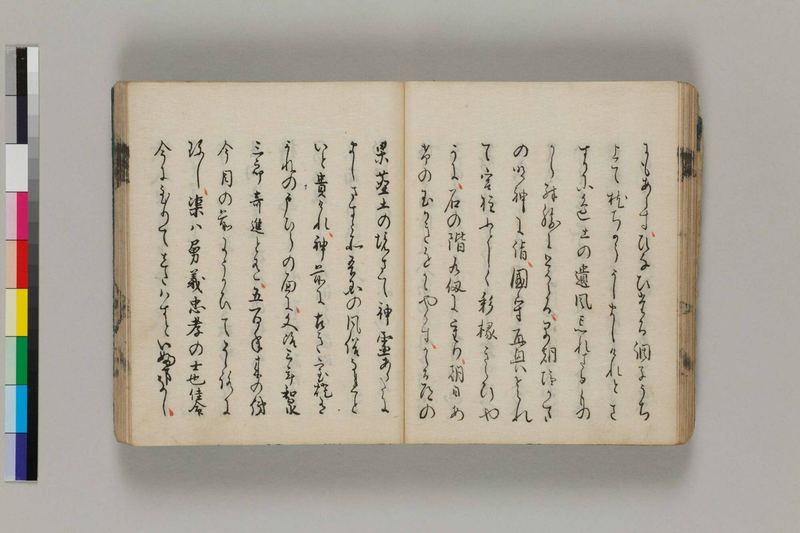
Oku no Hosomichi, 1702
Picture
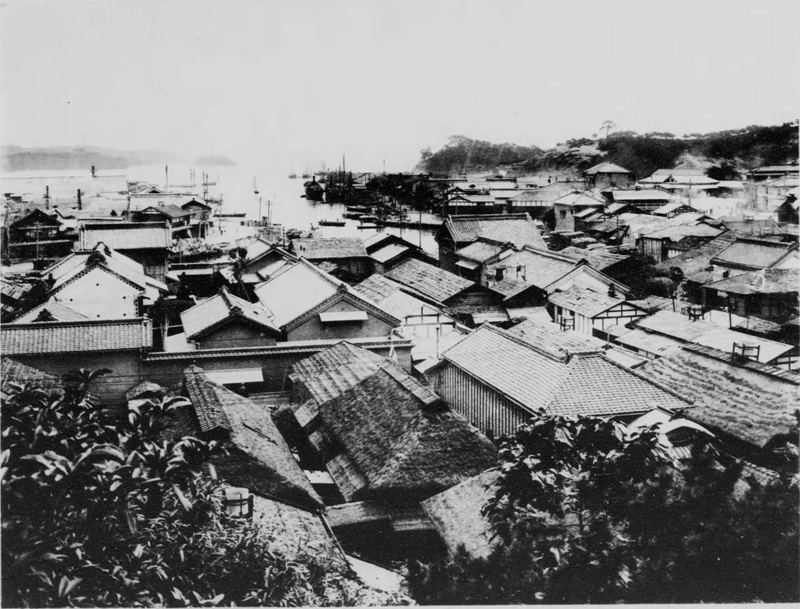
鹽竈町全景, 1913
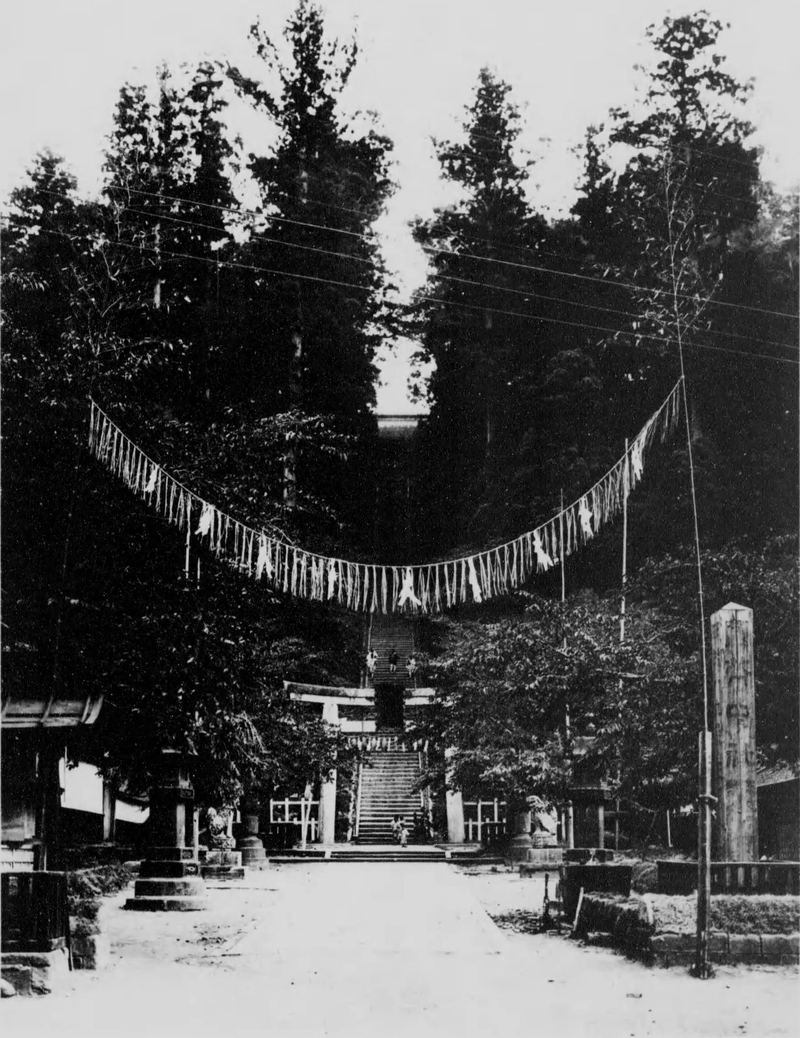
鹽竈神社, 1913
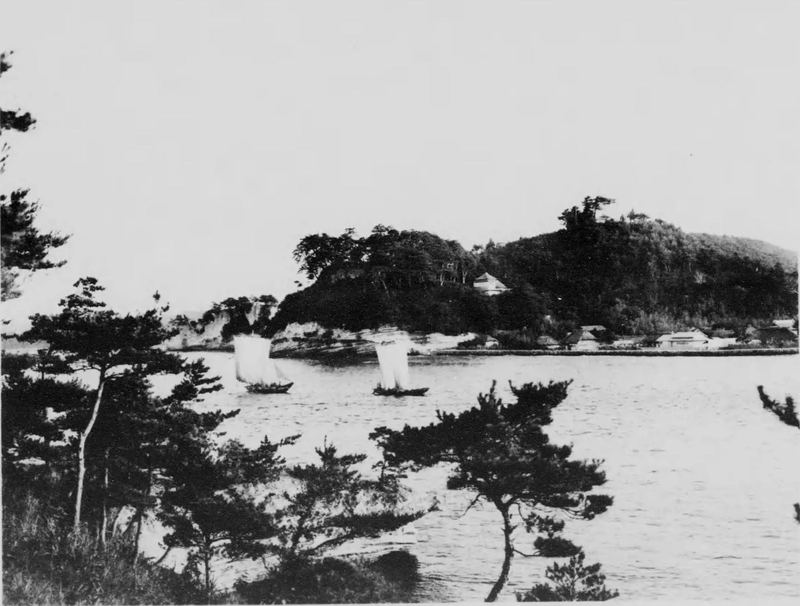
多聞山麗觀, 1913