The Shiogoshi Pine, Tenryūji, Eiheiji
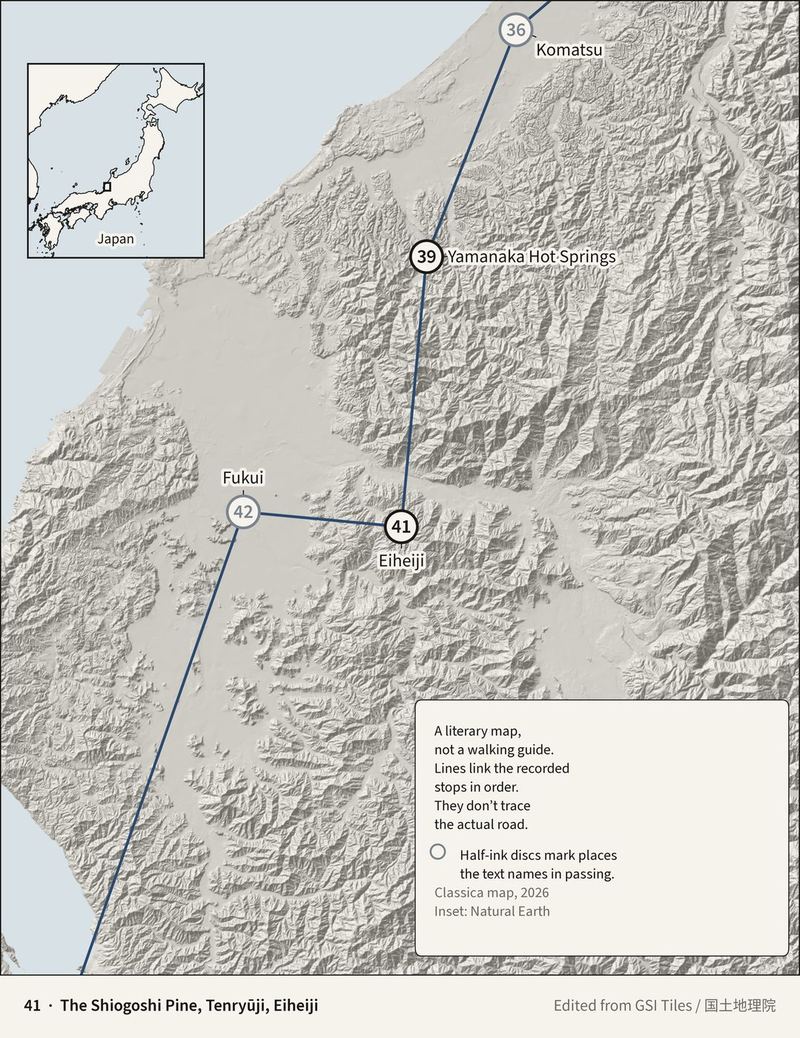
Map, The Shiogoshi Pine, Tenryūji, Eiheiji
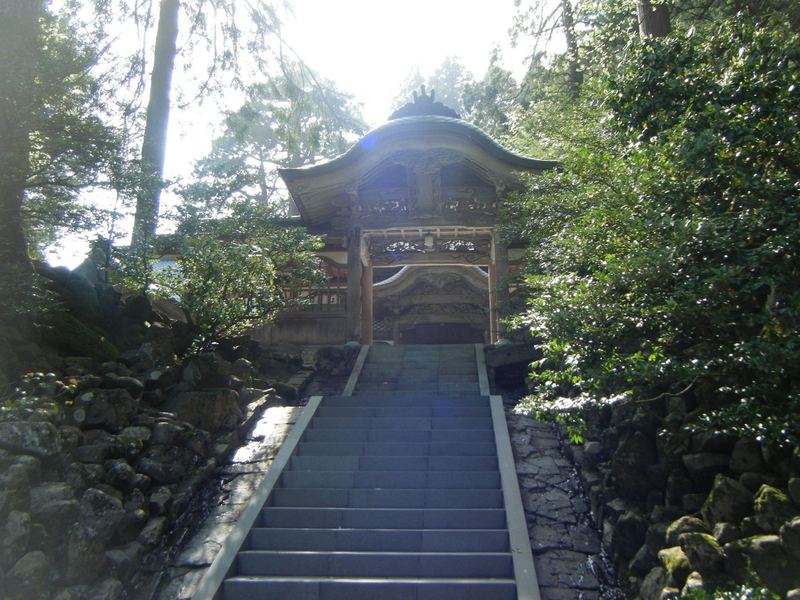
Eiheiji gate
At the border of Echizen I poled a boat across Yoshizaki Inlet to see the Shiogoshi Pine.
All through the nightit lets the storm carrythe waves to it,and lets the moonlight drip—the Shiogoshi Pine— Saigyō
This one poem says all there is to say of the scene. To add a single word would be like raising a useless sixth finger.
At Maruoka I called on the elder of Tenryūji, as we had an old bond. A man of Kanazawa named Hokushi had meant only to see me off a little way, but had followed me all the way here. He had not let a single view pass without thinking it over, and now and then he came out with verses of touching invention. Now that we had come to part at last:
Writing on it,then tearing the fan in two—the lingering of parting
We went some fifty chō, three miles or more, into the mountains and paid our respects at Eiheiji. It is the temple of Zen Master Dōgen. That he kept a thousand leagues away from the capital and left his traces among mountains like these, they say, was for a worthy reason.
Traveler’s notes
At the border of Echizen he poles a boat across Yoshizaki Inlet (吉崎の入江) to see the Shiogoshi Pine (汐越の松).
Saigyō’s tanka: 終宵嵐に波をはこばせて / 月をたれたる汐越の松. 終宵 is yomosugara; the pine lets the storm carry waves to it all night, and lets the moonlight drip. This one poem, Bashō says, exhausts the scene; to add a word would be like raising a useless sixth finger (無用の指).
At Maruoka he calls on the elder of Tenryūji, an old acquaintance. Hokushi (北枝) of Kanazawa, meaning only to see him off a little way, has followed all the way here.
物書て / 扇引さく / 餘波哉: they write on a fan and tear it in two as a parting gift, each keeping half. 餘波 (nagori) is the lingering of farewell.
Some fifty chō — three miles or more — into the mountains they pay their respects at Eiheiji, the temple of Zen Master Dōgen (道元禪師). That he kept a thousand leagues from the affairs of the capital (邦機千里を避て) and left his traces in such a mountain shadow was, they say, for a worthy reason.
1702 first printing
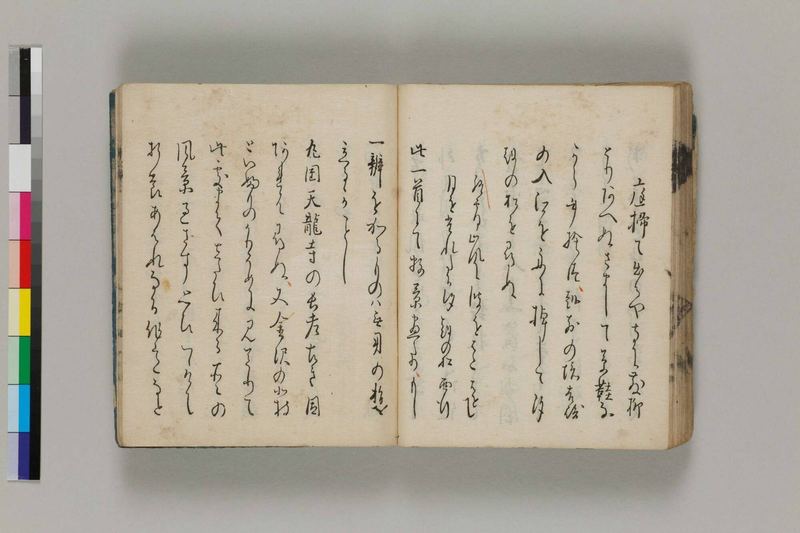
Oku no Hosomichi, 1702