The Takekuma Pine
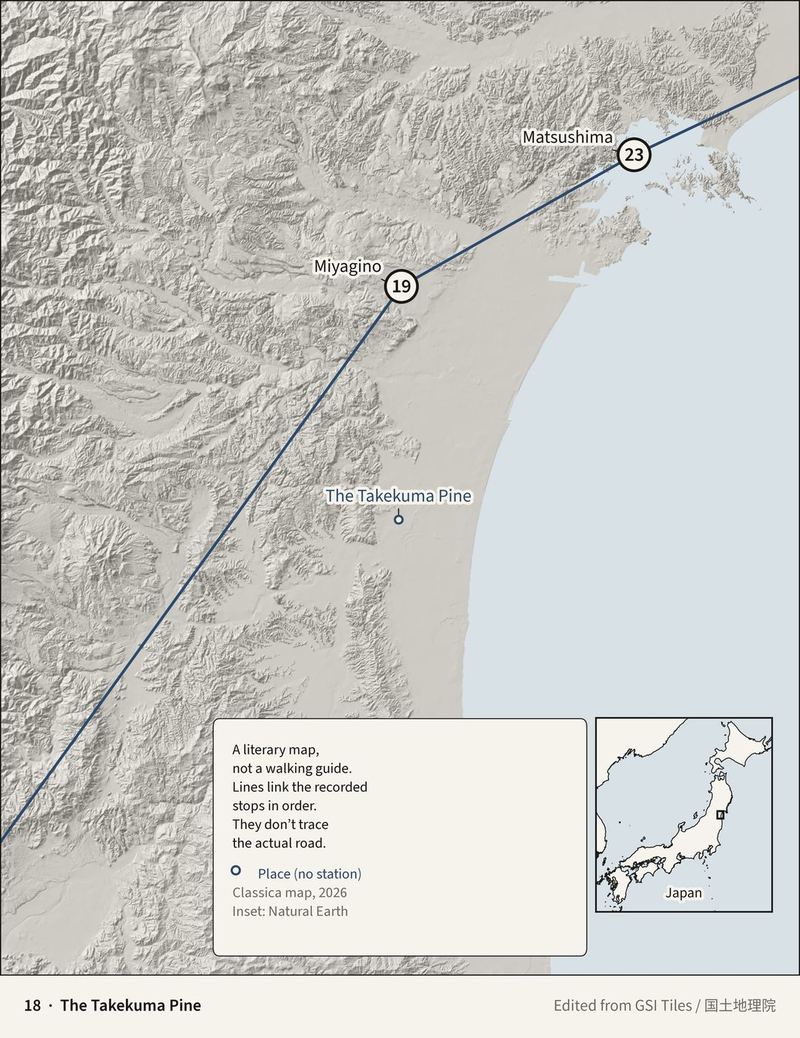
Map, The Takekuma Pine
It is at the Takekuma Pine that one truly feels one’s eyes come open. Right from the ground the trunk divides in two, and you can tell it has not lost its ancient form. The first thing I thought of was the monk Nōin. Long ago, a man who came down to these parts as governor of Mutsu cut this tree to make piles for a bridge over the Natori River; perhaps that is why Nōin wrote that “this time, of the pine, no trace remains.” I had heard that through the generations it had at times been cut down and at times replanted, yet now it stood once more in a shape worthy of a thousand years, a pine of the most auspicious look.
A man named Kyohaku had given me a farewell verse, “Late cherry blossoms, show him the Takekuma Pine,” and so:
After the blossoms,the pine with its double trunk—three months to see it
Traveler’s notes
The Takekuma Pine (武隈の松) is an utamakura famed for dividing into two trunks (二木) right from the ground.
The first thought is of Nōin, who found no trace of the pine: a governor of Mutsu had cut it for piles of a bridge over the Natori River. It has been cut and replanted through the generations; now it stands again in a shape worthy of a thousand years.
Kyohaku’s farewell verse, quoted in the headnote, was “Late cherry blossoms, show him the Takekuma Pine” (武隈の松みせ申せ遲櫻). Kyohaku keeps a short o.
櫻より / 松は二木を / 三月越: after the cherries (Bashō left Edo at the end of the Third Month) he sees the two-trunked pine, having crossed three months — and 二木 (two trunks) plays against 三月 (three months / the Third Month).
1702 first printing
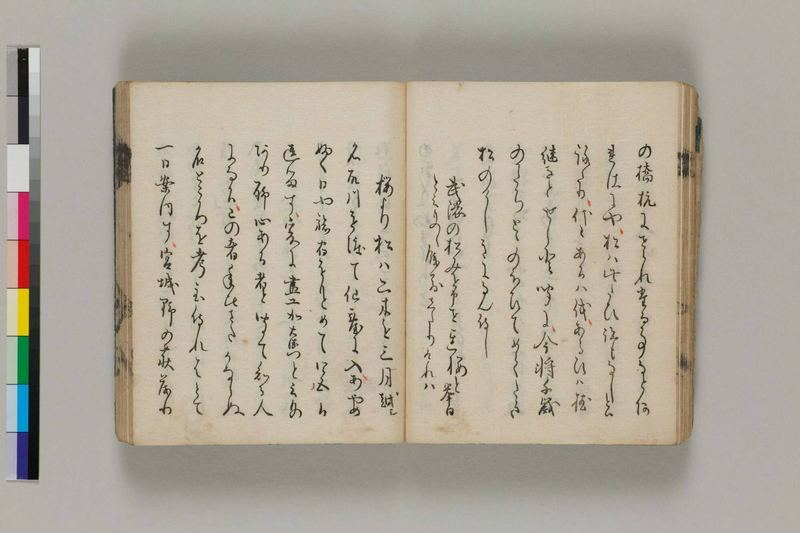
Oku no Hosomichi, 1702