Unganji Temple
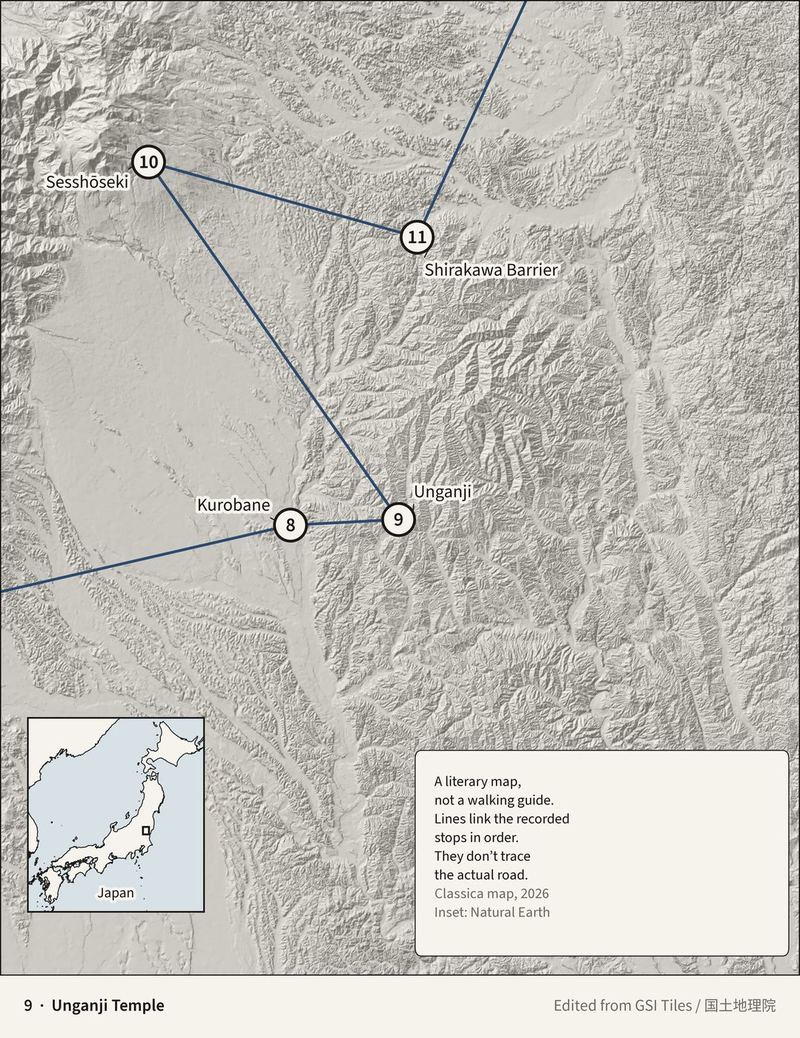
Map, Unganji Temple
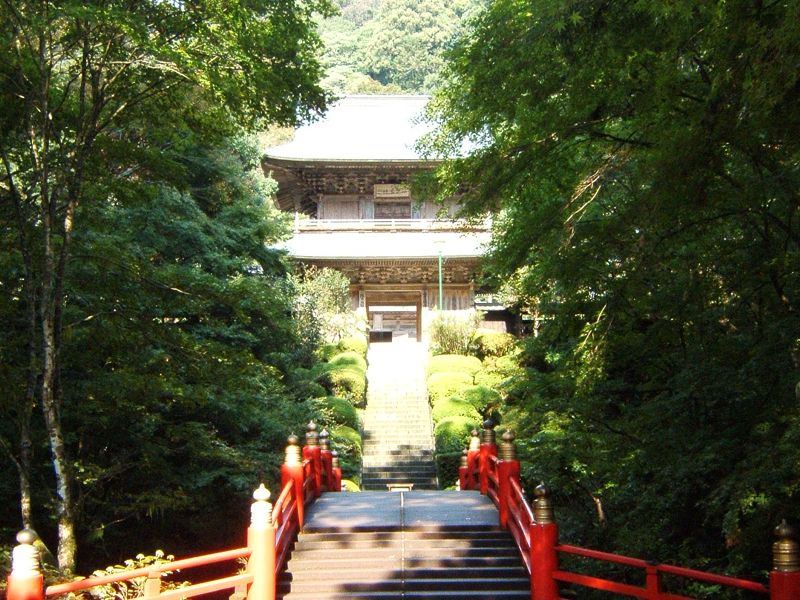
Unganji, Ōtawara
Deep in the hills behind Unganji Temple, in this same province, is the place where the priest Butchō once lived in retreat. He told me once that he had written on a rock, using a piece of pine charcoal:
Not five feet square,long or wide, this grass hut—I would regreteven building it,were it not for the rain
Wanting to see the place, I took up my staff and set out for Unganji. People eagerly offered to come along, and there were many young ones among them who chattered and joked all the way, so that we reached the foot of the mountain before I knew it. The mountain had a look of hidden depths. The valley path ran far on, dark with pines and cedars, the moss dripping wet, and though it was the Fourth Month the air was still cold. Where the ten views came to an end, we crossed a bridge and passed through the temple gate.
Wondering where the old retreat might be, we climbed the hill behind the temple, and there was the little hut, set on top of a rock and built against the mouth of a cave. It was like seeing Zen Master Myō’s Barrier of Death, or the stone chamber of the Dharma Master Hōun.
Woodpeckers tooleave this little hut unbroken—summer trees standing deep
I wrote this verse on the spur of the moment and left it on a pillar.
Traveler’s notes
雲岸寺 in the text is Unganji Temple (雲岩寺), in Shimotsuke. 佛頂和尚 (the priest Butchō), Bashō’s Zen teacher, once lived in retreat deep behind it.
The tanka in pine charcoal on a rock is Butchō’s: 竪横の五尺にたらぬ草の庵 / むすぶもくやし雨なかりせば. 庵 is read io (historical いほ). 五尺 is five shaku, about five feet; むすぶ means to “bind,” i.e. build, a hermitage.
妙禪師の死關 and 法雲法師の石室 are austere Zen retreats (a sealed “barrier of death” and a stone chamber) to which Bashō likens the cave hut. Precise historical identifications uncertain here.
It is the Fourth Month (卯月), but the mountain air is still cold. 十景 are the temple’s ten scenic views; a bridge then leads to the gate.
木啄も庵はやぶらず夏木立: kitsutsuki mo / io wa yaburazu / natsu kodachi. Both 木啄 (woodpecker) and 夏木立 (a grove in full summer leaf) are summer kigo. Even woodpeckers, who bore into wood, leave the hut unbroken.
とりあへぬ一句: a verse made on the spot and left on a pillar.
1702 first printing
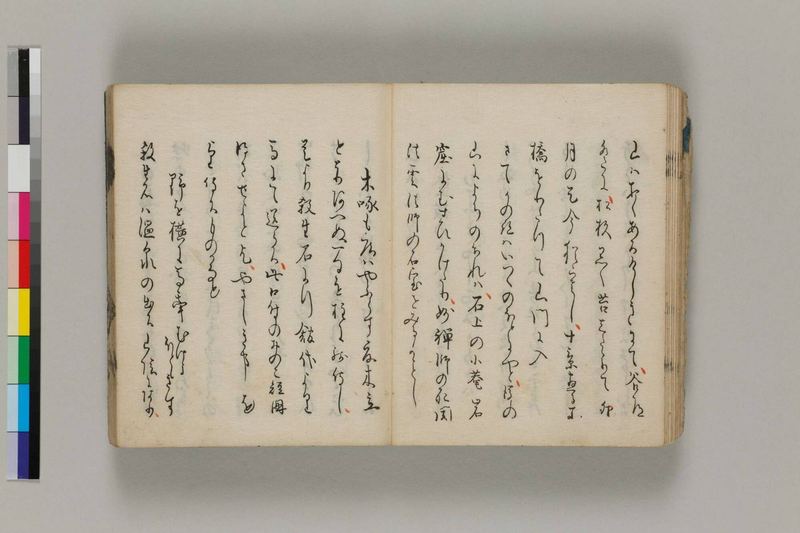
Oku no Hosomichi, 1702