Matsushima
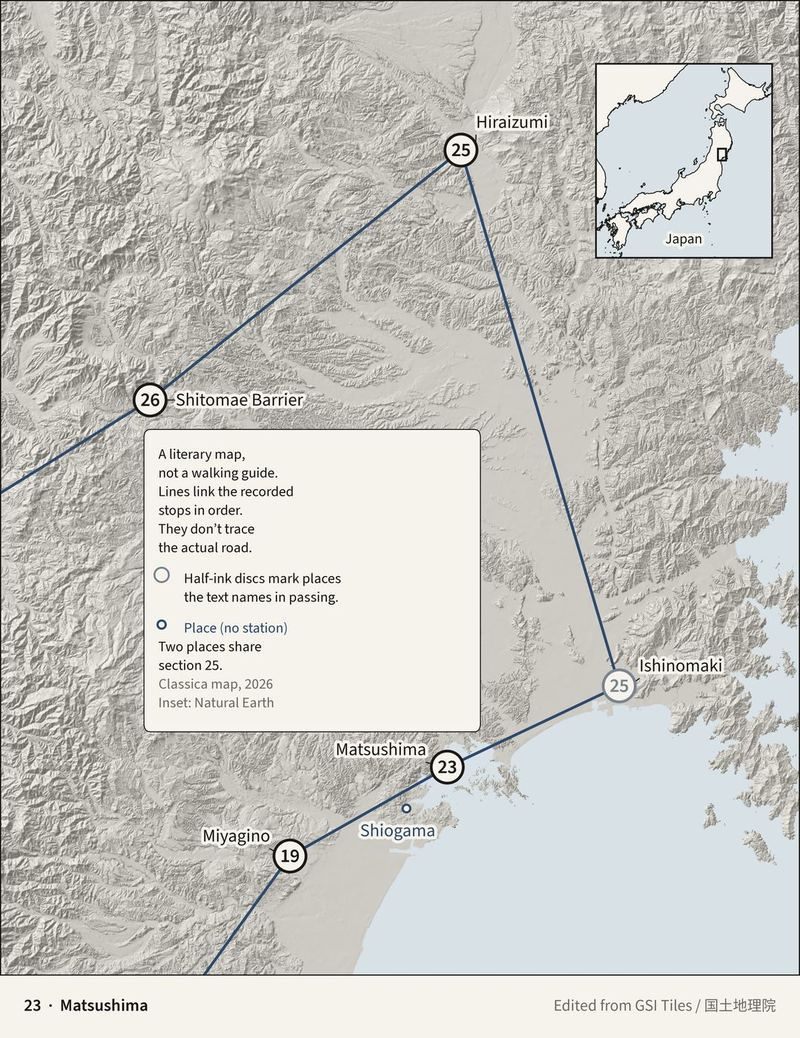
Map, Matsushima
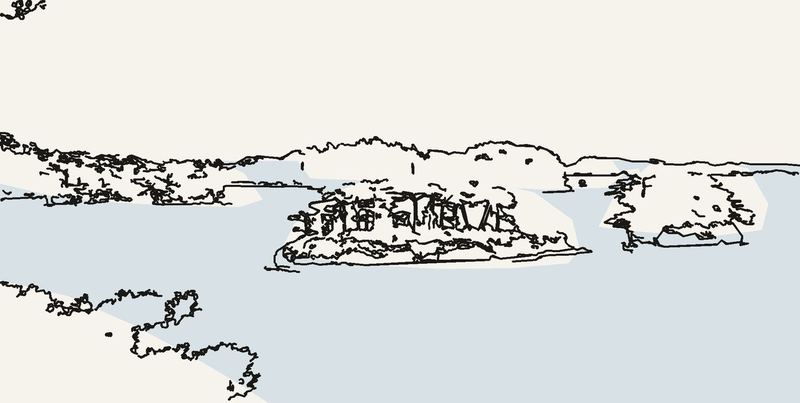
Matsushima Bay
It was already close to noon. We hired a boat and crossed to Matsushima. The distance was a little over two leagues, and we landed on the shore of Ojima.
It has been said so often that it is worn thin, but Matsushima is the loveliest prospect in all our land, and need yield nothing to Lake Dongting or West Lake. The sea comes in from the southeast, and the bay, three leagues across, brims with a tide like that of the Zhe River. Islands beyond counting are gathered there. The tall ones point up at the sky; the low ones crawl on their bellies over the waves. Some are doubled, some stacked three deep; they branch off to the left and run together to the right. Some seem to carry others on their backs, some to hold others in their arms, like parents fondling children and grandchildren. The green of the pines is deep, and their branches and needles, bent by the salt wind, are twisted as though someone had trained them so. The whole scene has a remote, dreamlike calm, like a beautiful woman putting on her face. Could it be the work of Ōyamazumi, the god of the mountains, in the age of the mighty gods? Before such craft of heaven and the maker of things, who could wield a brush or find words enough?
Ojima is an island joined to the land and running out into the sea. There are the remains of Zen Master Ungo’s retreat, and the rock where he sat in meditation. Here and there in the shade of the pines one also sees a man who has turned from the world, living quietly in a grass hut where the smoke rises from fallen ears of grain and pine cones. I did not know who they were, yet I felt drawn to them and stopped by, and meanwhile the moon came to lie on the sea and the view of the daytime was made new again. We went back to the shore of the bay and looked for lodging, and our room had windows that opened from an upper story, so that we slept as travelers in the midst of wind and cloud, and the feeling was wonderful almost past belief.
Matsushima, and—cuckoo, you should put onthe shape of a crane— Sora
As for me, I kept my mouth shut and tried to sleep, but sleep would not come. When I left my old hut, Sodō had given me a Chinese poem on Matsushima, and Hara Anteki a Japanese poem on the pine-clad bay of Matsugaura-shima. I undid my bag and made them my companions for the night. There were also hokku by Sanpū and Dakushi.
Traveler’s notes
They hire a boat near noon and land on Ojima (雄嶋), a little over two leagues away. Ojima is joined to the land and runs out into the sea.
Matsushima is called the finest prospect in Fusō (Japan), not yielding to Lake Dongting or West Lake; the bay brims like the tide of the Zhe River. Islands seem to carry or cradle one another like parents and grandchildren; pines twisted by salt wind look trained by hand; the scene is like a beautiful woman putting on her face.
ちはや振 marks the age of the gods; Bashō asks whether this is the work of Ōyamazumi (大山ずみ), god of the mountains. Before such craft of heaven (造化の天工) no one could find a brush or words enough — and he himself writes no verse.
On Ojima are the remains of Zen Master Ungo’s retreat and his sitting-rock. Recluses live in pine-shade huts, burning gleaned grain and pine cones.
Sora’s 松嶋や / 鶴に身をかれ / ほとゝぎす: the hototogisu, a summer kigo, should borrow a crane’s body to be worthy of these pine islands (pine and crane are a felicitous pair). かれ is the imperative of “borrow.”
Bashō keeps silent and cannot sleep. From his pack he takes Sodō’s Chinese poem on Matsushima, Hara Anteki’s waka on Matsugaura-shima, and hokku by Sanpū and Dakushi, and makes them his companions for the night.
Riichi’s 1778 notes
Matsushima is the loveliest prospect in all our land.
A commentary on the Huainanzi (淮南子註) says, “Fusang is a wilds in the east” (扶桑東方之野也). A commentary on the Songs of Chu (楚辭註) says, “Fusang is the name of a tree; the sun rises beneath it” (扶桑木名、日出其下). The Illustrated Compendium of the Three Powers (三才圖會, Sancai tuhui) says, “The land of Fusang lies east of the Great Han; many fusang trees grow there, their leaves like the paulownia, their fruit like pears” (扶桑國在大漢國東、其上多扶桑木、葉似桐、實如梨). That is the word. But here, following common usage, it should be taken as referring to Japan. “Fine prospect” (好風) means a beautiful landscape.
need yield nothing to Lake Dongting or West Lake. […] The bay brims with a tide like that of the Zhe River.
凡, the character dictionaries note, means “all” (皆也); it is the same as what common speech calls oyoso, “in general.” Dongting is a landscape famous in China. There is Lake Dongting (a great lake by name), half belonging to Tanzhou (潭州) and half to Yuezhou (岳州). West Lake, he writes, is at Ezhou (鄂州). These landscapes are described in detail in Wang Yanzhou’s (王弇州) Collected Works in Four Sections (四部稿, Sibu gao) and in Pleasures of a Flourishing Reign (熙朝樂事, Xichao leshi) and other such books. The Zhe River (浙江) is one of the rivers of China. The Zihui (字彙) says, “The Zhe River is in Qiantang District” (浙江在錢塘縣). Because the force of the water at Yushan bends and twists and raises a tidal head, it is called the Zhe, the “bending river.” It lies opposite the west of Kyushu in Japan; it is a harbor for ships coming and going to Japan, a flourishing place, and its scenery is said to be without equal. Those who praise its tide do so in the verse “The misty rain of Mount Lu, the tide of the Zhe River: before you arrive, a thousand regrets will not rest; once you have come back, there is nothing else — the misty rain of Mount Lu, the tide of the Zhe River” (廬山烟雨浙江潮、未到千般恨不休、到得歸來無別事、廬山烟雨浙江潮).
like a beautiful woman putting on her face.
窅, according to the Zihui, means the appearance of something deep and far (深遠貌). Dongpo’s poem on West Lake says, “If I would compare West Lake to Xishi — light powder and heavy paint” (欲把西湖比西子、淡粧濃抹). “Mutually becoming” (相宜) is this sense. Xishi (西子) means Xi Shi (西施), the name of the beauty whom Fan Li, minister to King Goujian of Yue, presented to King Fuchai of Wu. “Light powder and heavy paint” (淡粧濃抹) means putting on makeup thinly and putting it on thickly.
Could it be the work of Ōyamazumi, the god of the mountains, in the age of the mighty gods?
Ōyamazumi is the great mountain-kami Ōyamazumi no Kami (大山祇神), a god of the mountains. This deity is seen in the Chronicles of Japan (日本紀, Nihongi) in connection with Izumo and elsewhere.
Before such craft of heaven and the maker of things, who could wield a brush or find words enough?
The maker of things (造化), according to the Zhengzitong (正字通), is defined thus: “The yin and yang of heaven and earth move and travel, and the ten thousand things are born and live: that is called 造化.” “Heaven’s craft” (天工) is like what common speech calls the fine workmanship of heaven and earth themselves (天地自然ノ細工). The phrasing “the maker of things and heaven’s craft” may come from the line in Jia Yi’s (賈誼) Rhapsody on the Owl (鵬鳥賦, Funiao fu), “The maker of things acts as the craftsman; the ten thousand things are the furnace” (造化爲工、萬物爲鑪). It means that the scene is beyond the reach of ordinary hands.
Matsushima, and— / cuckoo, you should put on / the shape of a crane — Sora
The conception of this verse, he says, comes from an old song. Such songs can still be seen even now.
1702 first printing
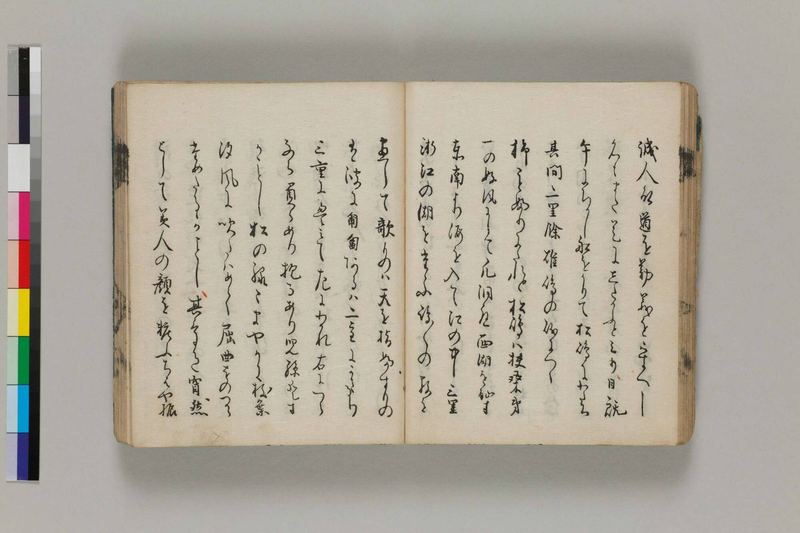
Oku no Hosomichi, 1702
Picture
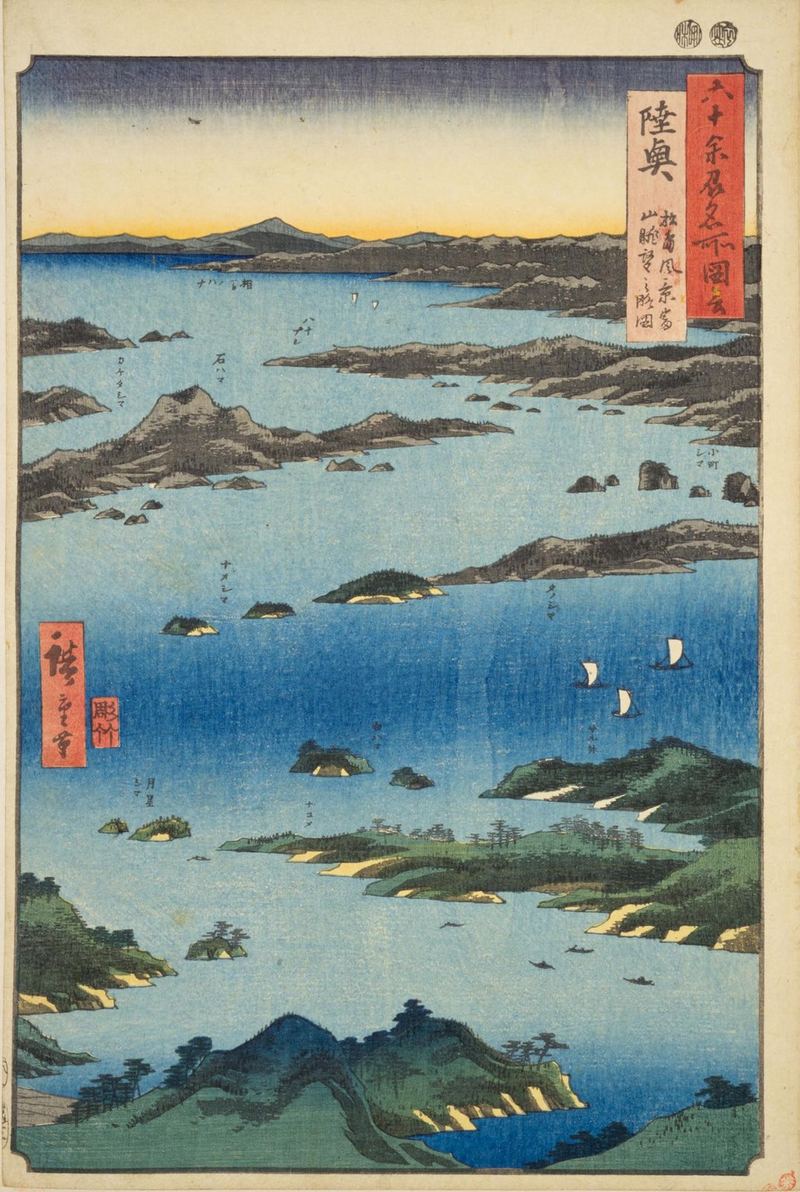
Matsushima
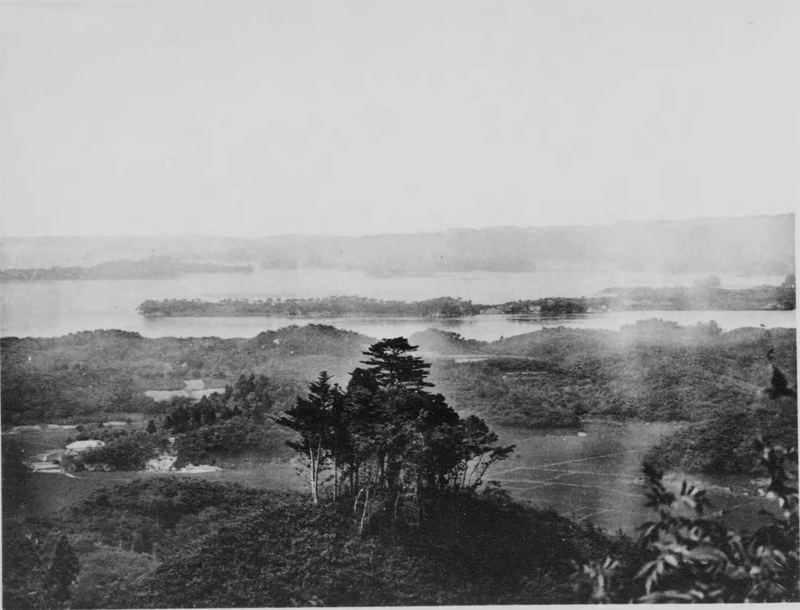
富山展望, 1913
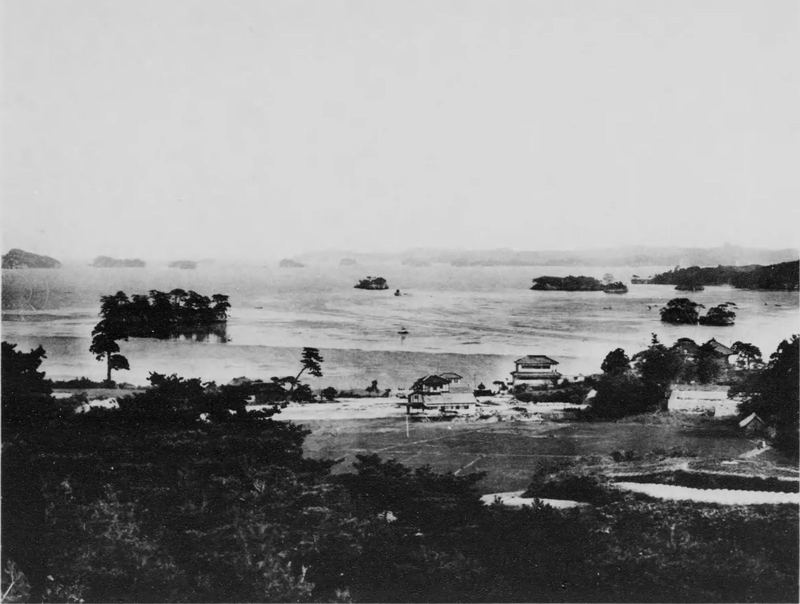
新富山, 1913
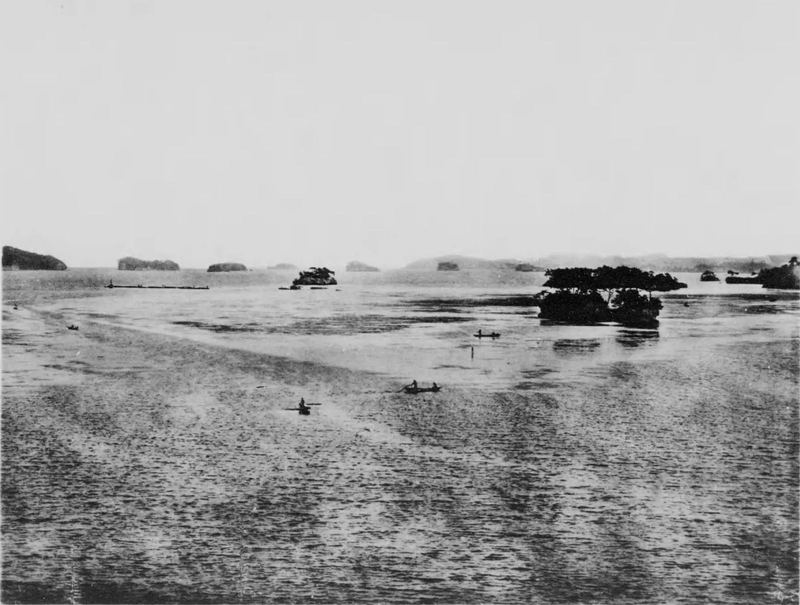
大觀山展望, 1913
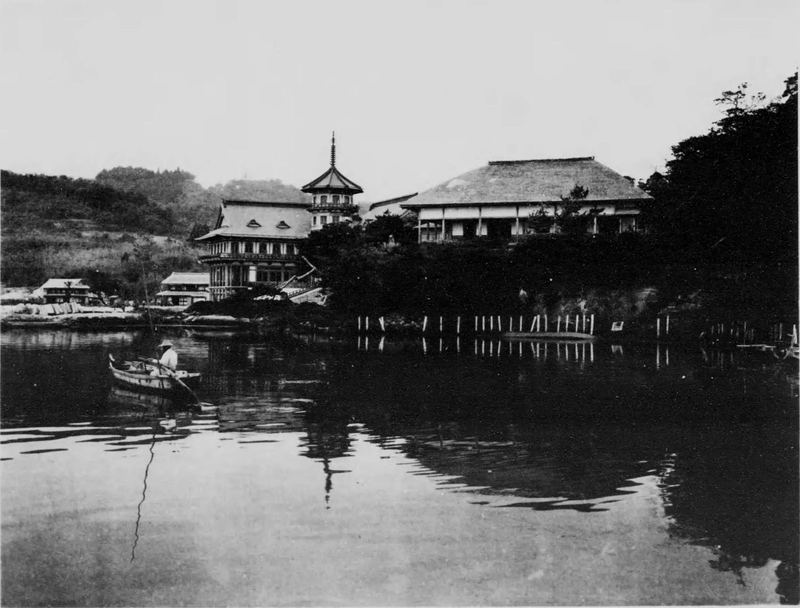
觀瀾亭, 1913
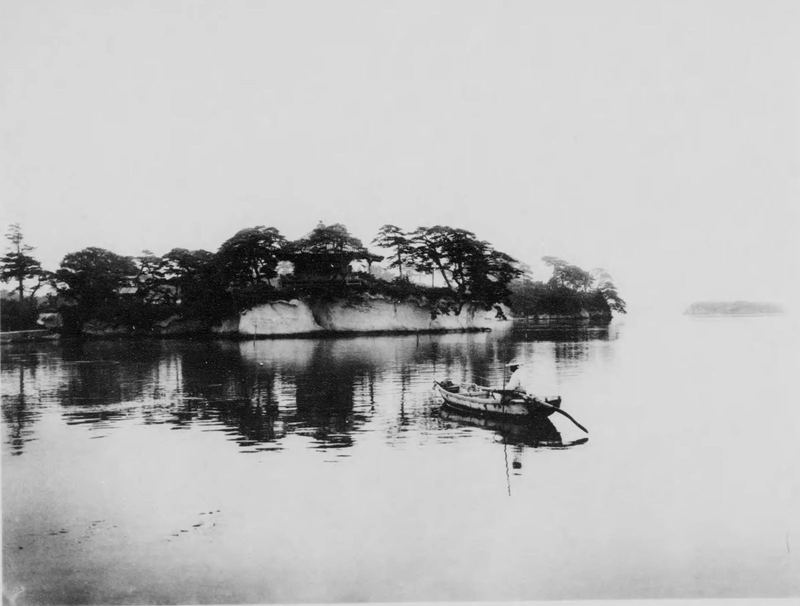
五大堂, 1913
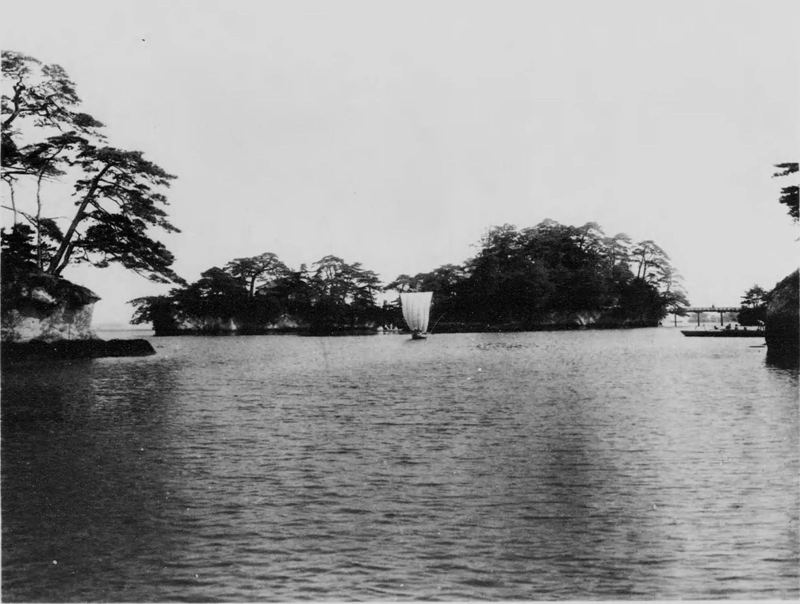
雄島附渡月橋, 1913

雙子島, 1913
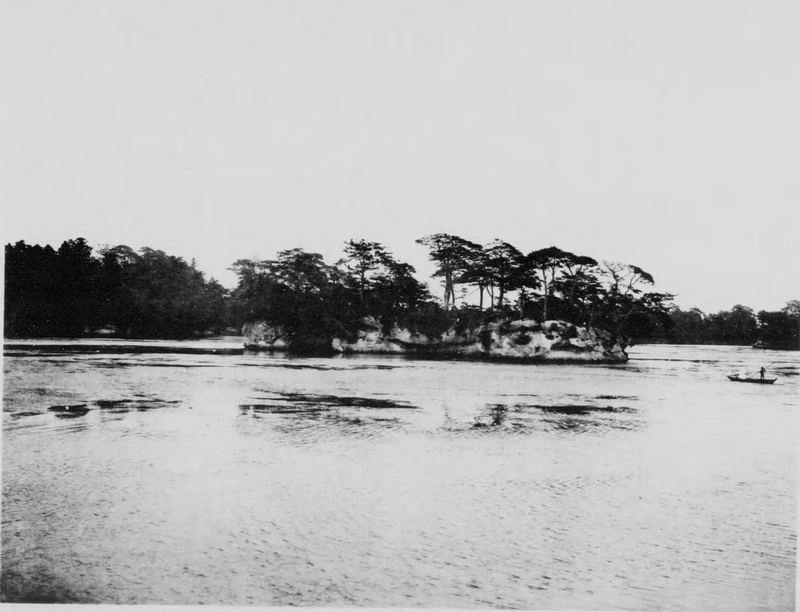
經ケ島, 1913
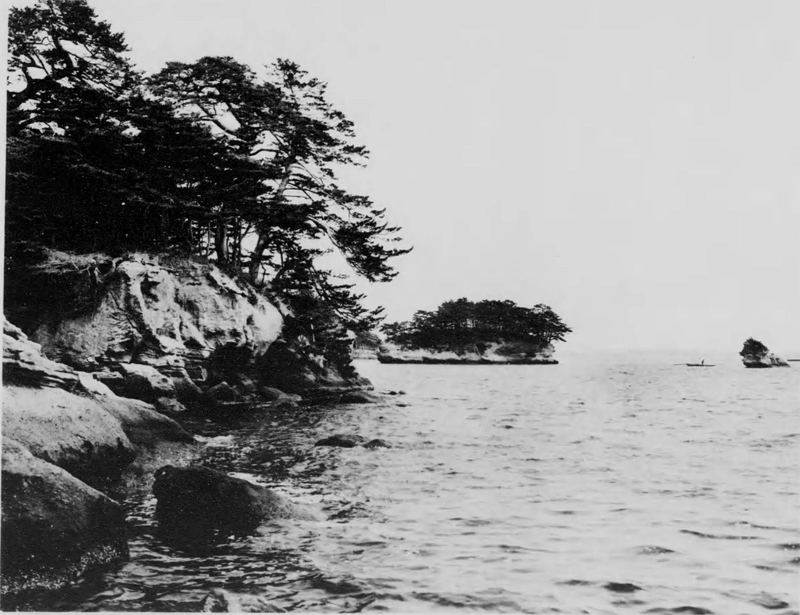
朝日島, 1913
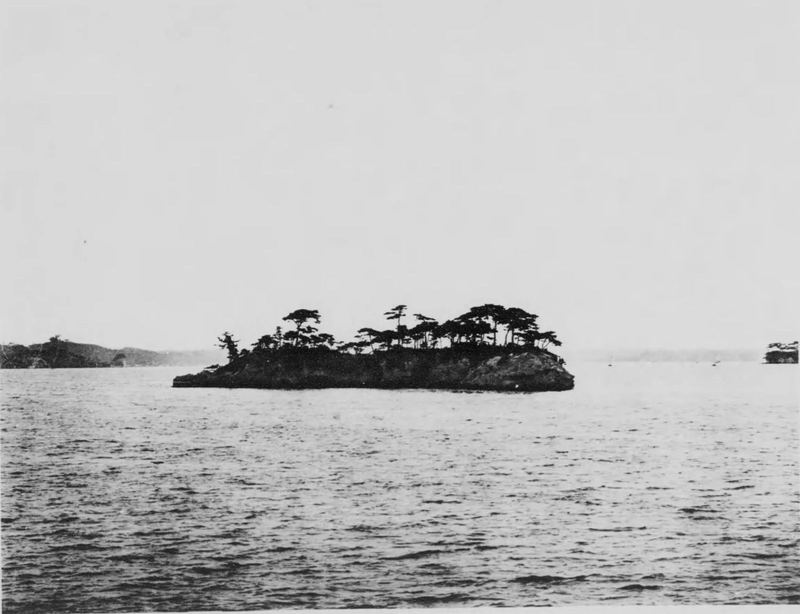
毘沙門島, 1913
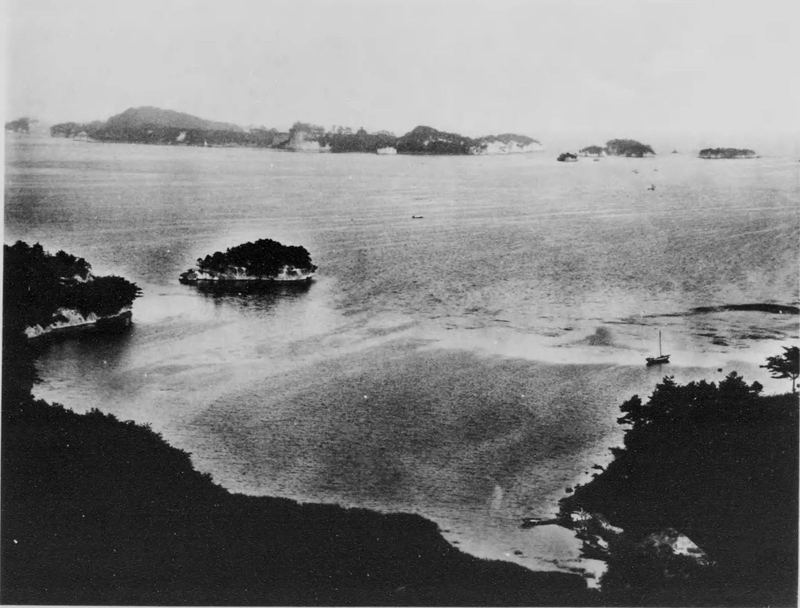
扇谷展望, 1913
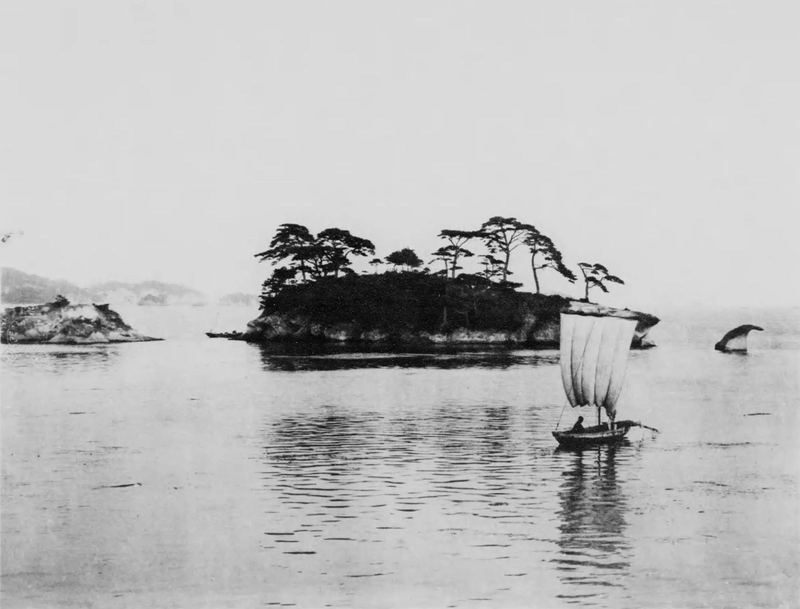
在城島, 1913