The Shirakawa Barrier
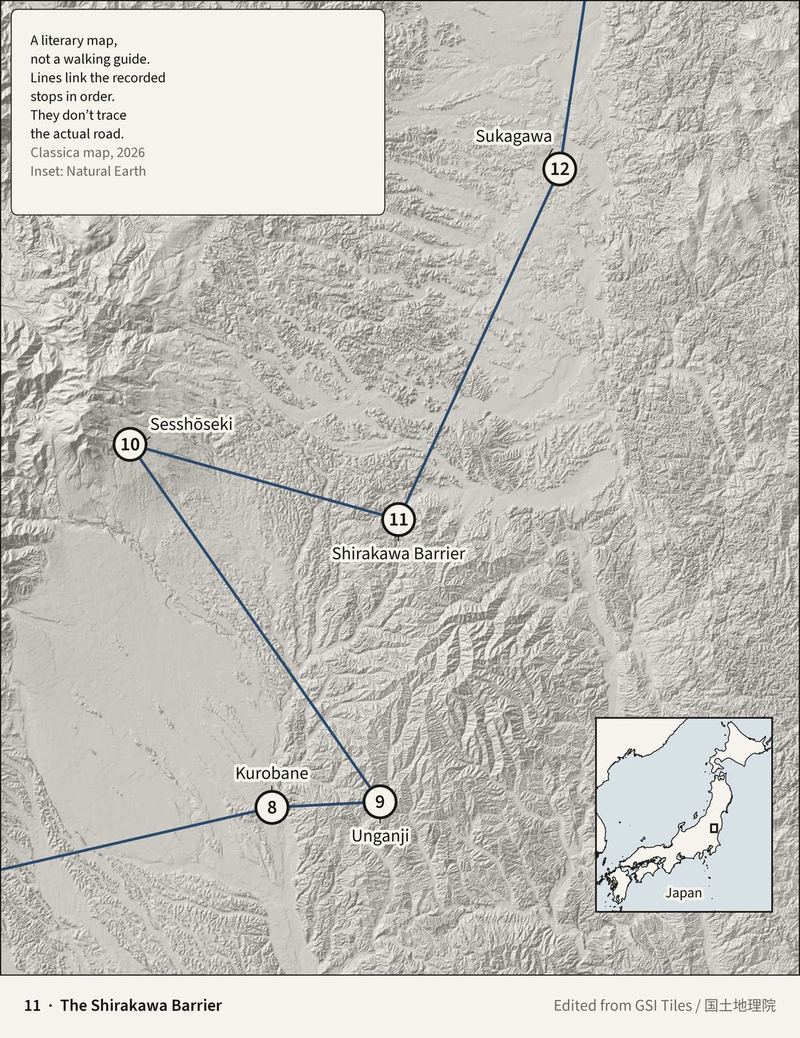
Map, The Shirakawa Barrier
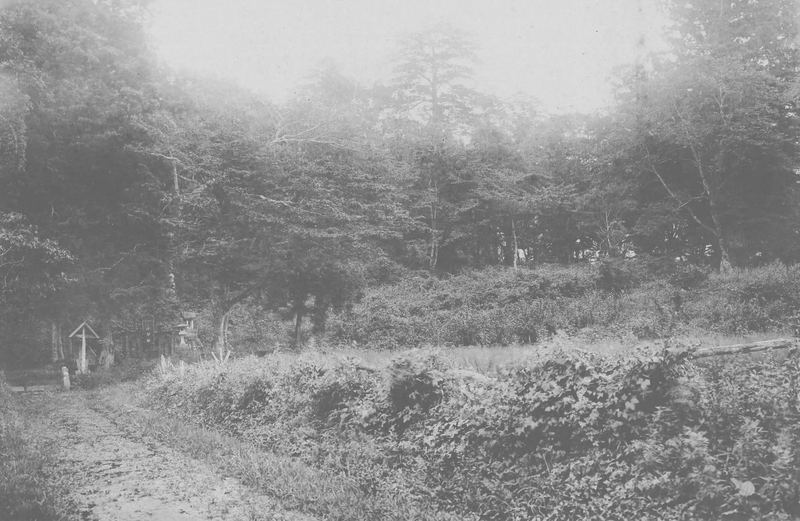
Shirakawa Barrier, 1908
By the way
Bashō was longing to cross this barrier before he’d even left Edo. Wish granted.
Unsettled days had piled up one on another, but when we came to the Shirakawa Barrier my traveler’s heart at last grew steady. I understood now why a poet of old had looked for some way to send word to the capital. This barrier above all, one of the three great barriers, has always held the hearts of men of verse. With the autumn wind still sounding in my ears and the red leaves still before my mind’s eye, the treetops in their green summer leaves moved me all the more. The pure white of the deutzia was joined by the white of the wild rose in bloom, and it felt as if we were crossing through snow. They say, as Kiyosuke recorded with his brush, that people of old straightened their caps and changed into proper dress before passing through.
Deutzia flowerstucked in my hair for a crown—my best clothes for the Barrier— Sora
Traveler’s notes
白川の關 (also 白河の關), the Shirakawa Barrier, is one of the three great barriers (三關) and the main poetic threshold of the deep north.
いかで都へと便求しも: Bashō now sees why someone once sought a messenger to the capital from here — the gesture of poets addressing the capital from this barrier. Exact single source uncertain.
秋風を耳に殘し points to Nōin’s poem: he left the capital with the spring haze, but the autumn wind blows at the Shirakawa Barrier (都をば霞とともに立ちしかど秋風ぞ吹く白河の関). 紅葉を俤に holds the crimson leaves of older autumn poems on the same barrier.
He crosses in early summer — green leaves, deutzia (卯の花, a summer kigo), and wild rose (茨の花) — and the white blossom makes it feel like a crossing through snow, the more moving because those autumn scenes still ride with him.
清輔 (Fujiwara no Kiyosuke) recorded that people of old straightened their caps and changed into proper dress before passing through (usually identified with his Fukuro-zōshi).
Sora’s 卯の花をかざしに關の晴着かな: deutzia worn as a hair-ornament (かざし) becomes his 晴着 (haregi), the finest clothes for the barrier.
Riichi’s 1778 notes
Unsettled days had piled up, but when we came to the Shirakawa Barrier
This place is called the entrance to Ōshū, and the name of the old site is famous. It has long been a name of note. There is also the station called Shirakawa: south of that station one treads by a stele, at the border of Ōshū, and two shrines stand side by side, one of them named as the myōjin of 〓 no Futokoro. The southern one is said to be the shrine of 〓. What is now called Shirakawa is a district name, and there is a town below the station.
I understood now why a poet of old had looked for some way to send word to the capital.
A messenger, that one might send word to the capital, as of old.
This barrier above all, one of the three great barriers
Fuwa and Suzuka are named together with Shirakawa; to call it one of the three barriers is 〓.
has always held the hearts of men of verse.
From of old there have been many men of verse, and their hearts are stayed here.
With the autumn wind still sounding in my ears
This is Nōin’s “the autumn wind blows at the Shirakawa Barrier.” In Kiyosuke’s Book of the Folder (袋草紙, Fukurozōshi) it is said that Nōin did not in fact go down to Ōshū a second time: in order to compose this poem he secretly shut himself away, and a rumor arose that he had gone down to Ōshū. There is a report of his going down twice; as for once, it may be true. The matter is also seen in the Record of a Thousand Islands (〓千嶋記) and in A Collection of Things Heard, Past and Present (古今著聞集, Kokon chomonjū).
and the red leaves still before my mind’s eye, the treetops in their green summer leaves moved me all the more.
He means that, with the scarlet leaves of autumn still before his mind’s eye, the green summer treetops now before him were the more moving.
The pure white of the deutzia was joined by the white of the wild rose in bloom, and it felt as if we were crossing through snow.
The deutzia is a white flower of summer; the wild rose too is white, so in the midst of all this white everything is white. That is why he says it felt as if they were crossing through snow.
They say, as Kiyosuke recorded with his brush, that people of old straightened their caps and changed into proper dress before passing through.
In Kiyosuke’s Book of the Folder (袋草紙, Fukurozōshi) it is said that a man called Takeda no Daibu Kuniyuki, when he went down to Mutsu, put on formal dress especially when he passed the Shirakawa Barrier. Someone asked him why. He answered, “The lay monk of Kosobe read ‘the autumn wind blows’ of the Shirakawa Barrier — how could one do otherwise?” The lay monk of Kosobe is Nōin (the tradition is given further on).
1702 first printing
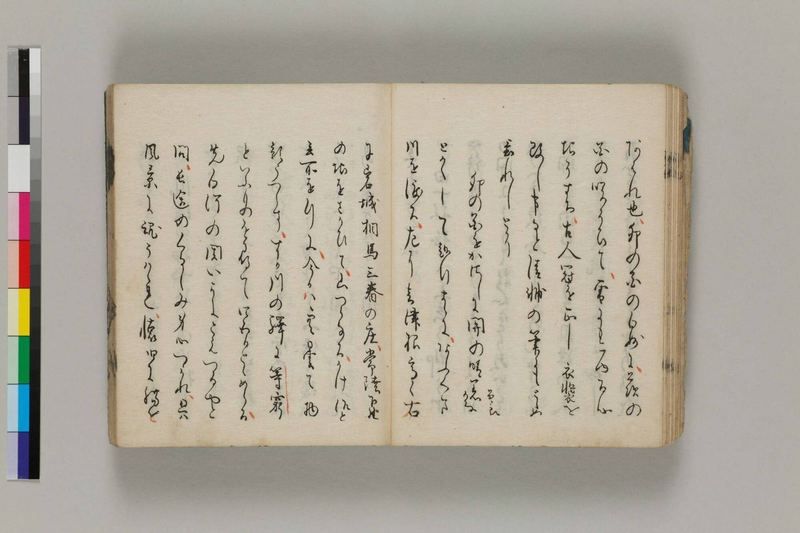
Oku no Hosomichi, 1702
Illustrated life
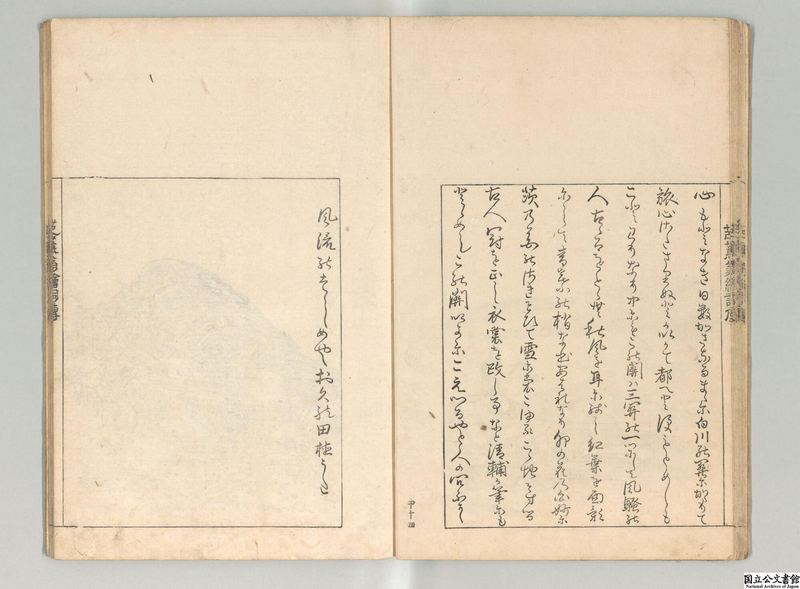
Illustrated life of Bashō, 1789–1801